Your roof is your home’s first line of defense against everything the BayArea throws at it — the marine-layer fog that rolls in off the Pacific, the salt-laced air in the Richmond and Sunset districts, the wind pressure on hillside homes in Marin County, and the heavy rainfall that Northern California winters bring. When that defense is compromised, the damage doesn’t stay on the roof.
The question isn’t whether to address it — it’s whether a repair will hold or whether a full roof replacement is the smarter, more cost-effective move. Marina Bay Roofing is a C-39 licensed, 5-star rated roofing specialist serving San Francisco and Marin County. Below are the nine signs our inspectors see most often that tell us a roof has reached the end of life.
If you’re seeing any of these in your home, schedule a roof inspection and we’ll give you a photo-documented assessment with no pressure and no guesswork.
It’s always better to be proactive when it comes to roofing issues. Be on the lookout for early signs of failure, or hire a Bay Area roofer to regularly inspect your roof for you. This will help to minimize repair costs and reduce risks of injury or property damage. Check out these top warning signs that you need to replace your roof in San Francisco.
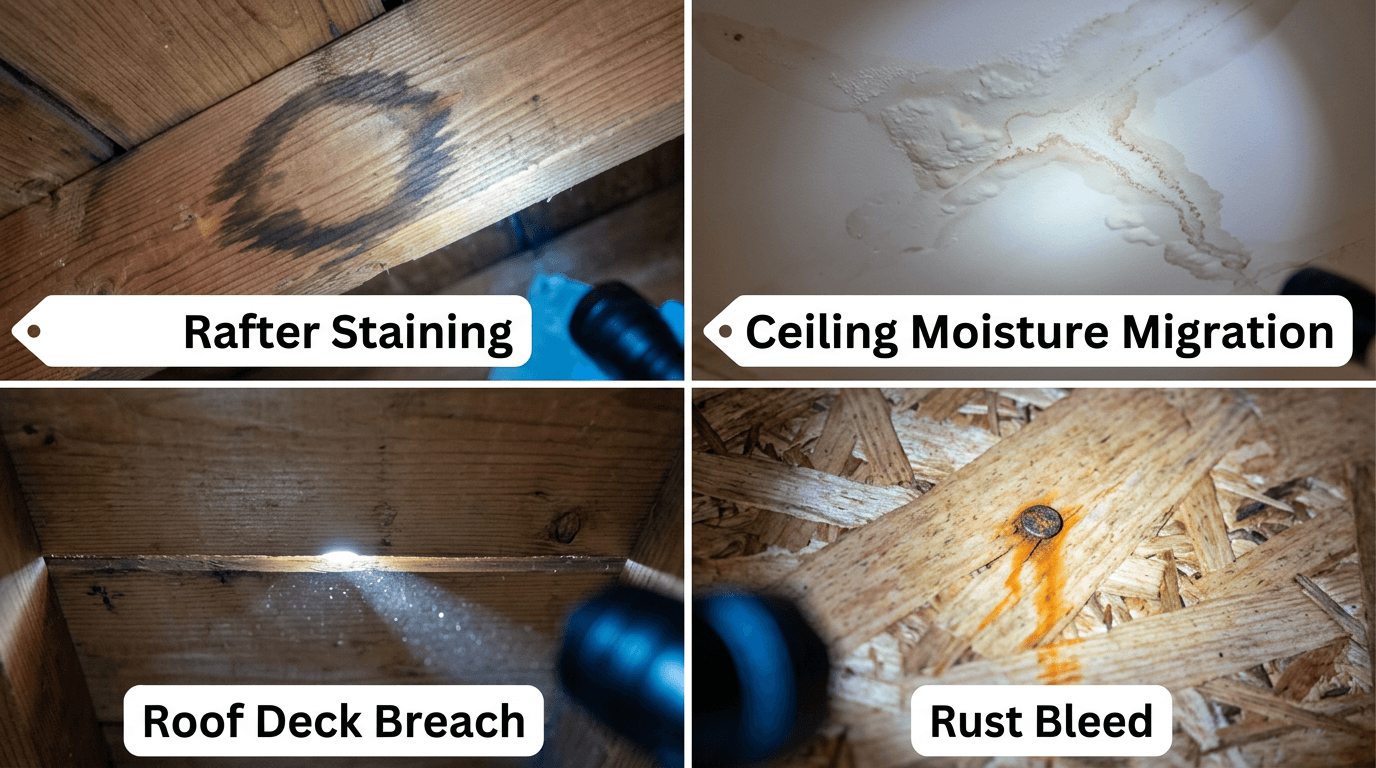
1. Water Damage
What to Look For Inside Your Home
- Moisture marks
- Yellow, brown, or gray stains
- Peeling paint on walls or ceilings
Take a look in your attic and check for damp rafters or sources of leaks. However, these quick checks are no substitute for getting basic inspections from a qualified roofer, which could potentially save you thousands of dollars in repairs. They will be able to spot minor damage early on that could save you from a total replacement. However, if you have severe water damage from multiple points on the roof, replacement is inevitable.
In San Francisco neighborhoods like the Outer Sunset and Outer Richmond, the marine layer deposits microscopic moisture on roofing surfaces nearly every morning. Over time, this saturates shingles, accelerates granule loss, and creates the kind of slow-drip leaks that don’t show up until the damage is already significant. In Marin County, seasonal rainfall combined with homes on hillside lots can push water into areas that a flat-site installation would drain naturally. If you’re seeing moisture marks and you’re not sure where they’re coming from, this is exactly why we photograph every inch of the roof during our inspection.
2. Age
Depending on material, the average lifespan of a roof is between 20 and 50 years.
- Asphalt shingles: 20 years (coastal salt air and fog can reduce this to 15–18 years in San Francisco’s western neighborhoods)
- Metal roofs: up to 50 years (aluminum and Galvalume are recommended near the coast due to corrosion resistance)
- Clay tiles: 40 years (common in Marin County hillside homes; fire-rated and WUI-compliant for most zones)
It’s helpful to know how old your roof is so you can estimate its lifespan. How many layers of shingles you have will also play a part, as roofs installed over several layers will indicate the need for a new roof.
3. Sagging
Sagging is a result of trapped moisture that has rotted the boards under the roof. There’s a very good chance that a droopy roof will need to be replaced before more damage occurs to the whole structure. Inspect the surface for signs of rotting boards, trapped moisture, and sagging spots, particularly at the lower points in the roof.
Tip: stand far back from your house, such as across the street, and inspect it from different angles. Your roof should look straight along its lines, which means it should be easy to spot signs of slumping and sagging.
In Marin County, many homes sit on hillside lots with complex roof pitches and multiple intersecting planes. These designs can trap moisture in valleys and low points more aggressively than a standard gabled roof. In San Francisco, some older Edwardian and Victorian homes have had multiple layers of roofing installed over the decades — once you hit three or more layers, the dead weight alone can stress the roof deck and contribute to sagging. A qualified roofer should inspect the decking and framing, not just the surface shingles.
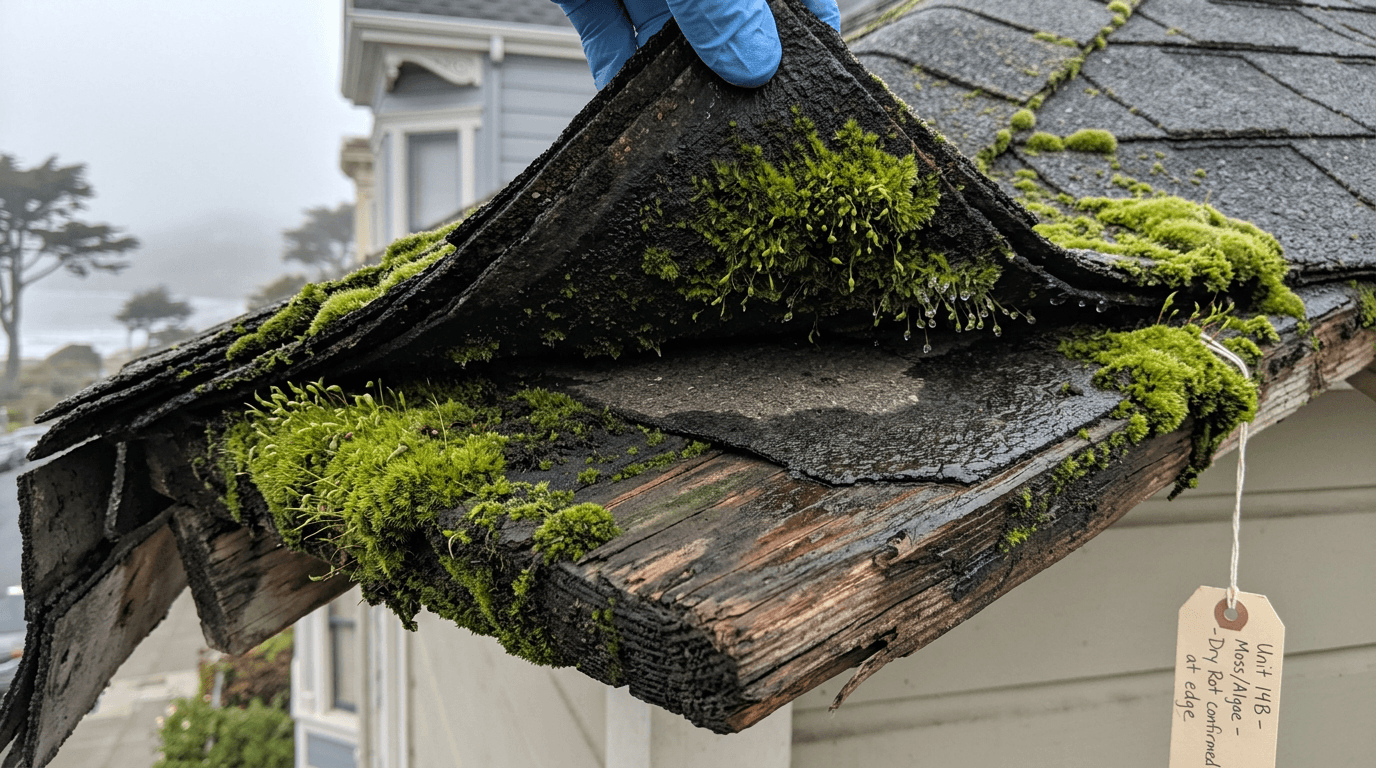
4. Moss, Mold, or Fungi
Moss, mold and fungi (i.e., mushrooms) are signs your roof has trapped moisture. You can remove moss with a stiff brush but be aware of underlying problems. If you can’t get it off, call a professional. If you suspect mold is present, your best bet is to hire a mold remediation firm to safely handle this organic substance, or get your roof replaced if the damage is widespread.
In San Francisco’s foggy western neighborhoods — the Inner Sunset, Forest Hill, West Portal — moss and algae growth on asphalt shingles is common and accelerated by the daily marine layer. Algae-resistant shingles with StainGuard or similar granular technology are worth specifying in a replacement if your home is in one of these neighborhoods.
5. Curling or Buckling Shingles
Why Shingles Curl
When shingles curl and buckle, this means they are no longer properly attached and have sustained damage. The wind can easily catch the curved surface of a shingle, which can get worse and worse with each storm until the shingle flies right off. You can replace one shingle here or there, but if it keeps happening, or it happens to multiple shingles with every storm, replacement is recommended.
San Francisco’s varied topography — Pacific Heights, Twin Peaks, the hills above Noe Valley — creates sharp wind pressure differentials that flat-terrain cities don’t experience. A shingle that has started to curl is already acting like a sail, and the gusts that move through these neighborhoods can lift and crack shingles faster than the same damage would progress in a calmer climate. If you’re seeing widespread curling after a storm season, wind uplift may be the culprit. Some replacement products like GAF Timberline HDZ are rated for winds up to 130 mph and are worth specifying for exposed hillside homes.
6. Granules in Gutters
As shingles age, their protective granules shed and get washed away, ending up in your gutters. Without those granules, your shingles can’t do their job. So if you’re spotting a lot of these tiny particles in your gutters when you clean them out, chances are you will need replacement soon.
This is particularly common in San Francisco homes with older three-tab shingles that were installed 15–20 years ago, when many of the city’s residential roofs were last replaced in bulk.
7. Missing Flashing, Fascia, or Gutter Guards
If you suspect damage has occurred to any of the supporting structures, such as cracked or missing flashing, gutter guards, or fascia, this is a red flag. These items make sure the roof is structurally sound and won’t pose a risk of collapse or leaks.
In Marin County, where many homes are located in Wildland-Urban Interface (WUI) zones, damaged or missing vent flashing is not just a water issue — ember-resistant vents are required under California Chapter 7A, and any replacement should ensure compliance. Always verify that replacement flashing materials are rated appropriately for your zone.
8. High Energy Bills
If your energy bills are much higher than normal, and you’ve been having issues with your aging roof, you may want to consider replacing it. A new roof with modern materials will offer occupants more comfort throughout the year while keeping your energy bills in check. Why spend all that money on utility bills if the heat and cold air is just going to escape from your roof?
California’s Title 24 energy code requires that replacement roofing on many residential properties meet cool roof standards. This is actually an advantage for homeowners in Marin County and San Francisco — a properly specified replacement using Title 24 compliant materials can meaningfully reduce cooling loads, particularly in the inland Marin areas like Novato and San Rafael that experience summer heat the coastal fog belt doesn’t moderate.
9. Repeated Repairs
If you’ve had repeated repairs done to your roof, and it’s getting on in years anyway, you may decide to replace it instead of throwing good money after bad. Bay Area roof replacement is much more cost-effective than shelling out money for repeated repairs year after year.
If you’re in a neighborhood with older housing stock — the Mission, Noe Valley, the Avenues, or downtown San Rafael — and you’ve been patching the same roof for years, it’s worth asking whether the underlying deck and structure have been inspected. A roof that keeps failing often has a substrate problem, not just a surface problem.
Get a Free 21-Point Roof Inspection From Marina Bay Roofing
If you’re seeing any of these signs — or if your roof is approaching 15–20 years old — don’t wait for the next storm to find out what it costs to ignore them. Marina Bay Roofing is a C-39 licensed, fully insured roofing specialist serving San Francisco and Marin County with a perfect 5-star rating across 90+ verified reviews.
Our inspection includes:
- A full 21-point evaluation of your roof’s condition
- Photo documentation of every issue found
- A written repair-or-replacement recommendation with clear pricing
- Guidance on manufacturer warranties and Title 24 compliance
Schedule Your Inspection — No pressure, no obligation.