Understanding Commercial Roof Damage
The phrase commercial roof damage covers a wide range of issues that affect the performance of a roof system.
Many of these issues begin subtly. A puncture in the roof membrane, a loose seam, or deteriorating flashing can slowly allow moisture into the structure.
If ignored, that moisture spreads beneath the surface and weakens insulation, decking, and support structures.
Over time, what began as small damage can lead to major structural damage inside the building.
Why Small Roof Problems Escalate Quickly
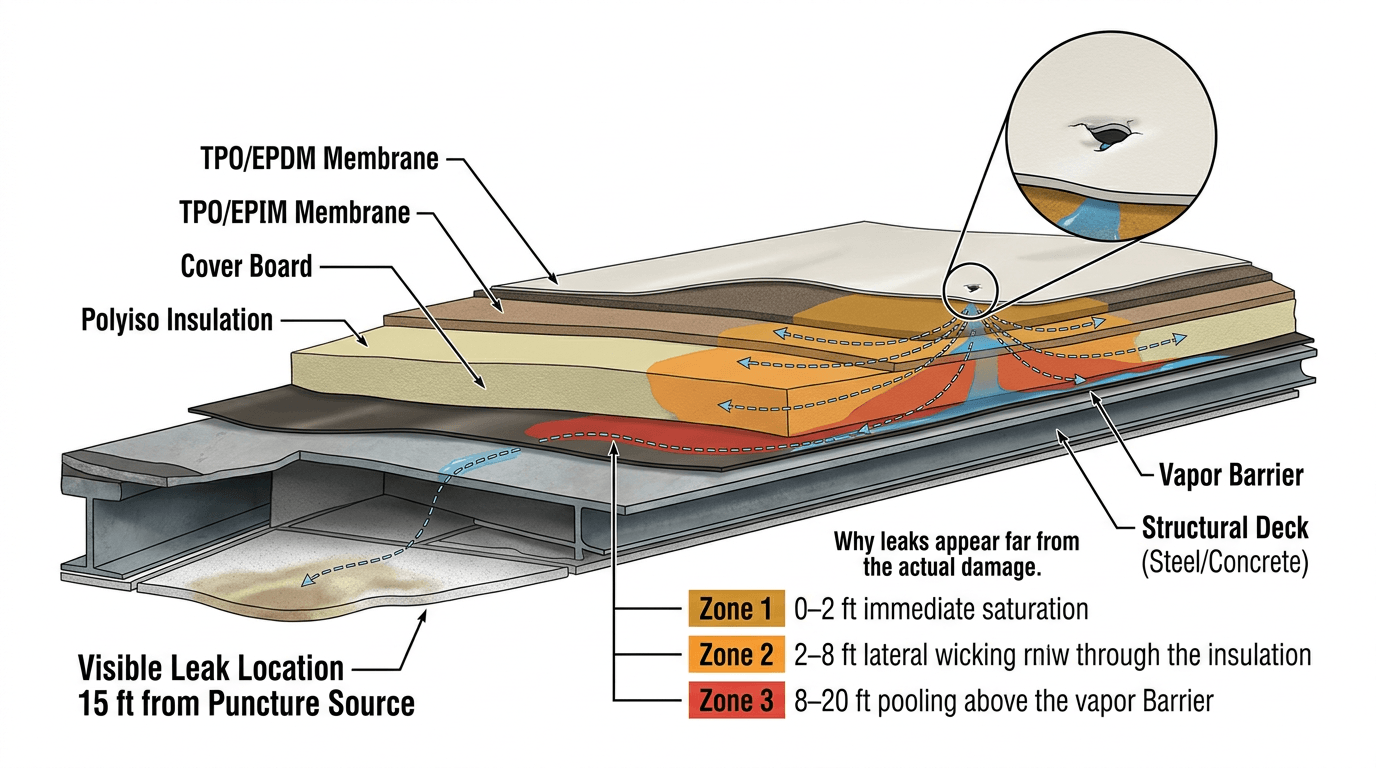
A commercial roof system is a layered assembly — membrane, insulation, vapor barrier, and structural deck — and water does not respect those layers once it finds an entry point. A 1-inch membrane puncture can allow water to travel 8–10 feet laterally before dropping, meaning the visible ceiling stain rarely marks the origin of the leak.
In the San Francisco Bay Area, the combination of coastal humidity, salt-laden air, and winter storm cycles creates conditions that accelerate this process. Fog alone deposits significant moisture on roof surfaces — enough to penetrate any existing crack or seam failure over time, even without direct rainfall.
What begins as a minor seam separation can saturate polyisocyanurate insulation within a single rainy season. Once insulation is wet, it loses its R-value, adds dead load to the roof structure, and becomes a substrate for mold growth. At that point, the repair scope shifts from a surface patch to a full tear-off and re-insulation — a cost difference of roughly 10x.
Roof Leaks Are Often the First Warning Sign
One of the most common indicators of trouble is roof leaks.
Even small leaks can cause serious damage to insulation, ceiling systems, and electrical infrastructure.
In many cases, interior stains or drips are only the visible portion of a larger issue happening above the ceiling.
By the time interior leaks appear, moisture may have already been spreading through the roof assembly.
Addressing leaks quickly prevents further damage and protects the integrity of the structure.
Common Roofing Problems in Commercial Buildings
Many common roofing problems stem from aging materials or environmental stress.
For example, prolonged sunlight can cause uv damage that weakens roofing materials and shortens the lifespan of the system.
On older systems, roof shrinkage may pull seams apart and create openings where water can enter.
Improper installation also contributes to long-term issues. Poor installation practices can leave vulnerable seams, flashing gaps, and drainage flaws.
Together, these factors lead to various roofing problems that compromise the performance of a commercial roof.
Signs Your Commercial Roof Needs Attention
Knowing the warning signs early gives you the best chance to act before damage spreads. Here are seven indicators that your commercial roof needs professional attention:
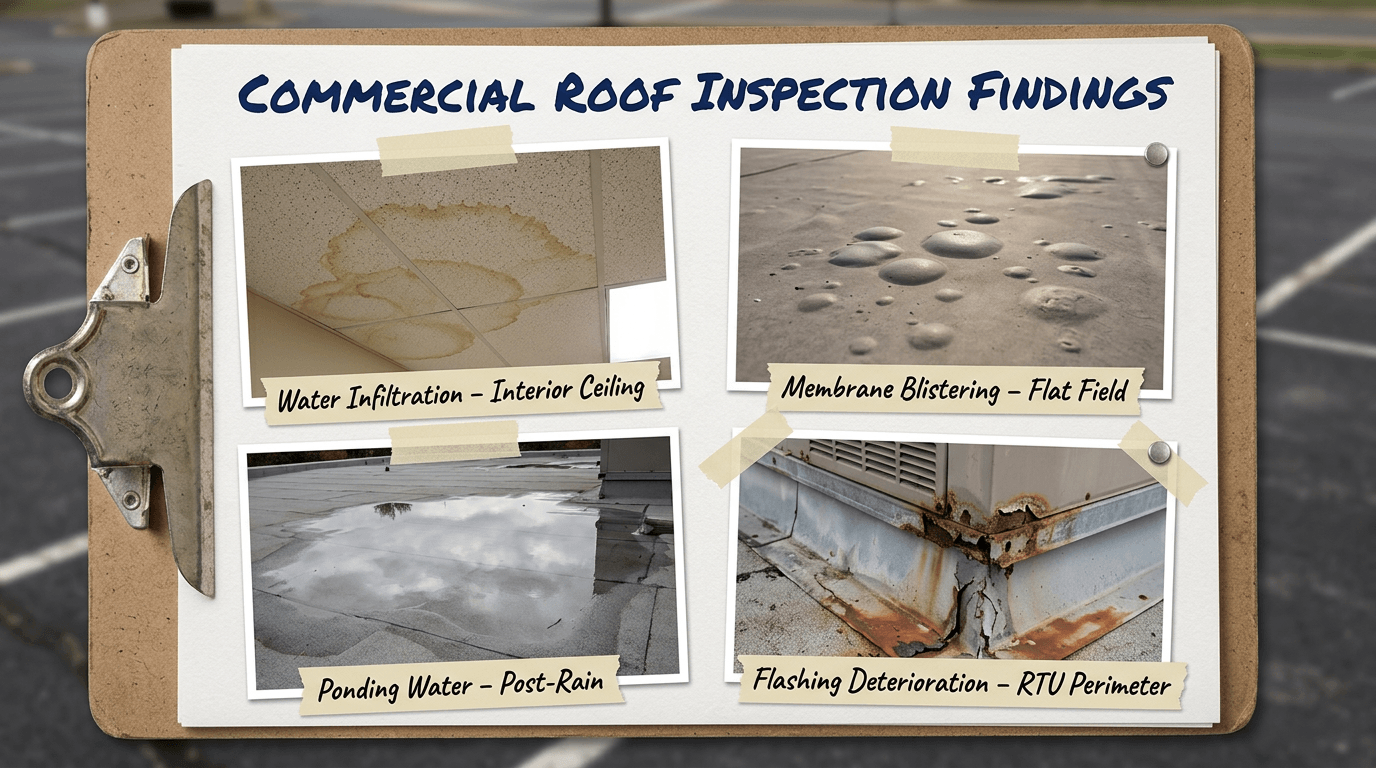
- Interior ceiling stains or water rings — Discoloration on ceiling tiles or drywall is a reliable indicator of active or past moisture intrusion. The stain location does not always correspond to the leak origin — water travels along decking and framing before dropping.
- Membrane blistering or bubbling — Raised areas on a flat roof surface indicate trapped moisture or air beneath the membrane. These areas are under tension and will eventually rupture, creating an open entry point for water.
- Standing water after 48 hours — Flat roofs are designed to drain within 48 hours of rainfall. Persistent ponding accelerates membrane degradation, adds structural load, and is a leading cause of premature roof failure.
- Separated or deteriorating flashing — Flashing around HVAC curbs, skylights, parapet walls, and drains is the most common entry point for water. Cracked sealant, rust, or visible gaps are urgent repair items.
- Musty odors or unexplained humidity indoors — Before a leak becomes visible, moisture in the insulation layer can cause elevated indoor humidity and mold-related odors. This is especially common in the top-floor spaces of commercial buildings.
- Granule loss or surface cracking — On modified bitumen or built-up roofing systems, granule loss and surface alligatoring indicate UV degradation. Once the protective layer breaks down, water penetration accelerates rapidly.
- Sagging or soft spots underfoot — If a roof surface feels spongy when walked on, the insulation or decking beneath has likely been saturated. This is a structural concern and requires immediate professional assessment.
When these issues appear, timely repair is essential to prevent further damage.
Storm Damage and Weather Exposure
Northern California weather can also contribute to storm damage.
Heavy rains and seasonal wind events place stress on vulnerable areas of the roof.
If the surface has already been weakened by uv damage, storms can accelerate deterioration.
In these conditions, even small vulnerabilities allow water infiltration that leads to interior water damage.
Over time, untreated damage can compromise the overall roof integrity.
How Bay Area Weather Accelerates Commercial Roof Damage
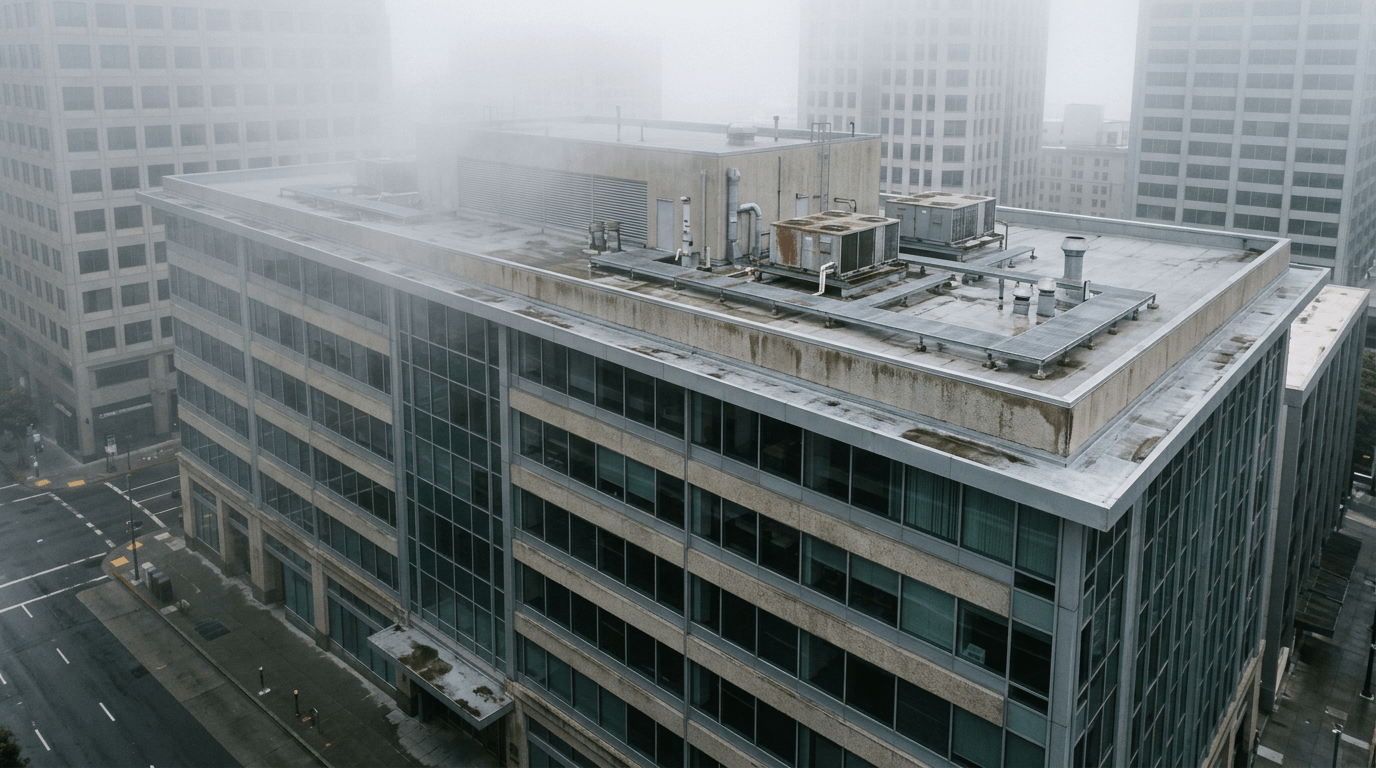
San Francisco and Marin County present a roofing environment unlike most of California. The combination of marine layer fog, salt-laden coastal air, and sudden winter storm systems creates stress on commercial roof systems that inland properties rarely experience.
Fog alone deposits significant moisture on flat roof surfaces overnight — enough to infiltrate any existing membrane crack or failed sealant over time, even without direct rainfall. Salt air accelerates the oxidation of metal flashing and fasteners, particularly on buildings within 2 miles of the bay or ocean shoreline.
The region’s UV index, while moderate compared to Southern California, causes consistent thermal cycling — roofing materials expand and contract daily, which gradually stresses seams and adhesive bonds. On older flat roofs, this cycling is a primary driver of seam separation.
For property owners in San Rafael, Sausalito, Mill Valley, and San Francisco’s commercial districts, these compounding factors mean that damage timelines are compressed. A problem that might take two years to worsen in Sacramento can advance significantly within a single rainy season here.
The Role of Regular Maintenance
Preventive care is the most effective way to avoid serious commercial roof problems.
Routine maintenance allows professionals to identify small issues before they develop into expensive failures.
A proactive plan typically includes cleaning drains, sealing seams, and inspecting flashing.
Consistent maintenance also helps extend the life of roofing materials and ensures the roof continues protecting the building.
For many Bay Area properties, scheduling regular maintenance twice per year is a practical strategy.
Why Regular Roof Inspections Matter
Scheduled regular roof inspections provide an opportunity to identify visible damage early.
During these evaluations, roofing professionals check seams, flashing, penetrations, and drainage points.
Inspections also help detect hidden problems that may not be visible from the ground.
By catching issues early, property owners can schedule timely repairs before the situation escalates.
These preventative steps protect the commercial property and prevent unnecessary disruption.
Professional Repair Protects Your Investment
When issues appear, experienced commercial roofing contractors can determine the most effective solution.
In some cases, a targeted repair can restore the system and prevent further deterioration.
In others, more extensive commercial roof repairs may be necessary to reinforce weakened areas.
Using quality roofing materials ensures the repaired sections integrate properly with the existing roof system.
Professional work also prevents future problems caused by shortcuts or incompatible materials.
Ignoring Small Issues Can Lead to Major Costs
Delaying repair may seem convenient, but the risks grow quickly.
Moisture intrusion can lead to interior damage, insulation failure, and long-term structural damage.
These situations often require larger restoration work and may even cause premature roof failure.
When problems spread through the system, property owners may face costly repairs that could have been avoided.
For any commercial property, early action is the most responsible and cost-effective approach.
Protecting Commercial Roof Systems in Marin County and the Bay Area
Bay Area buildings face unique environmental conditions.
Coastal air, fog, and intense sunlight place constant stress on roof systems across Marin County and San Francisco.
Because of these factors, consistent roof maintenance is essential.
Working with experienced providers of commercial roofing services ensures your system is designed and maintained for the local climate.
Reliable care today prevents major damage tomorrow.
Final Thoughts: Small Roof Issues Rarely Stay Small
Minor concerns rarely remain minor when it comes to a commercial roof.
Small cracks, seam separation, or unnoticed leaks can quickly escalate into major structural concerns.
By watching for early signs, scheduling routine maintenance, and addressing issues promptly, property owners can protect both their roof and their building.
When in doubt, consulting professional roofing services is the safest way to preserve long-term performance and avoid unnecessary risk.