Why Shingles Fail Early in Marin
Marin’s marine layer keeps roofs damp far more often than drier inland climates, and that near-constant moisture accelerates granule loss, algae growth, and shingle deterioration well ahead of a shingle’s rated lifespan. Asphalt shingles are especially vulnerable because their protective granules and asphalt base both degrade faster under repeated wetting and drying. Poor attic ventilation and shaded roof sections make the problem worse, while better roofing materials and maintenance can meaningfully extend a roof’s life in this climate.
What Is Marin’s Marine Layer, and Why Does It Matter for Roofs?
The marine layer is the low coastal fog and moist air that regularly rolls in off the Pacific and settles over Marin County, especially overnight and in the early morning.
Unlike a typical rainstorm that comes and goes, marine layer moisture can sit on a roof surface for hours nearly every day, keeping shingles damp long after inland roofs have dried out completely.
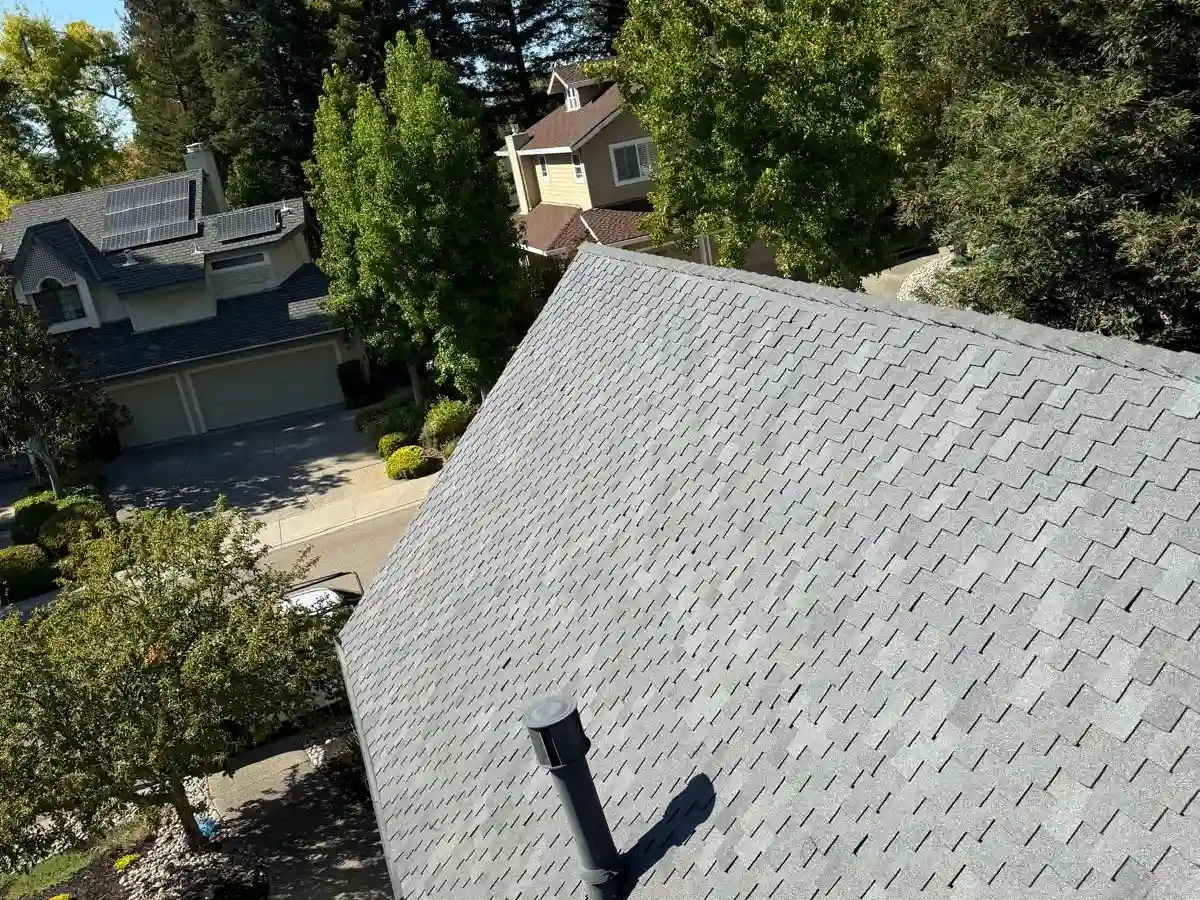
For roofs, that daily moisture cycle matters more than most homeowners realize. Asphalt shingles are engineered to handle rain and typical weather, but they’re not designed for sustained, repeated dampness day after day, year-round. Over time, that difference shows up as measurably shorter shingle life compared to the same product installed in a drier, sunnier part of California.
How Marine Layer Moisture Causes Premature Shingle Failure
Premature shingle failure in Marin almost always traces back to moisture exposure, working through a few specific mechanisms.
Granule Loss From Constant Moisture
Granule loss is one of the earliest and most visible signs of marine layer roof wear. The granules embedded in asphalt shingles protect the underlying asphalt from UV exposure and physical wear, but repeated wetting and drying cycles loosen them faster than in a consistently dry climate. Once granule loss becomes significant, the exposed asphalt underneath degrades much faster, accelerating shingle failure across the whole roof.
Algae Growth on Shaded, Damp Roofs
Algae is a near-constant presence on marine-layer-exposed roofs, particularly on north-facing slopes and sections shaded by trees. Algae thrives in the moisture the marine layer provides, and while it’s often mistaken for simple discoloration, sustained algae growth traps additional moisture against the shingle surface and contributes to long-term roof damage. Algae-resistant shingles exist specifically to address this issue in coastal climates like Marin’s.
Attic Ventilation and Its Role in Shingle Roof Lifespan
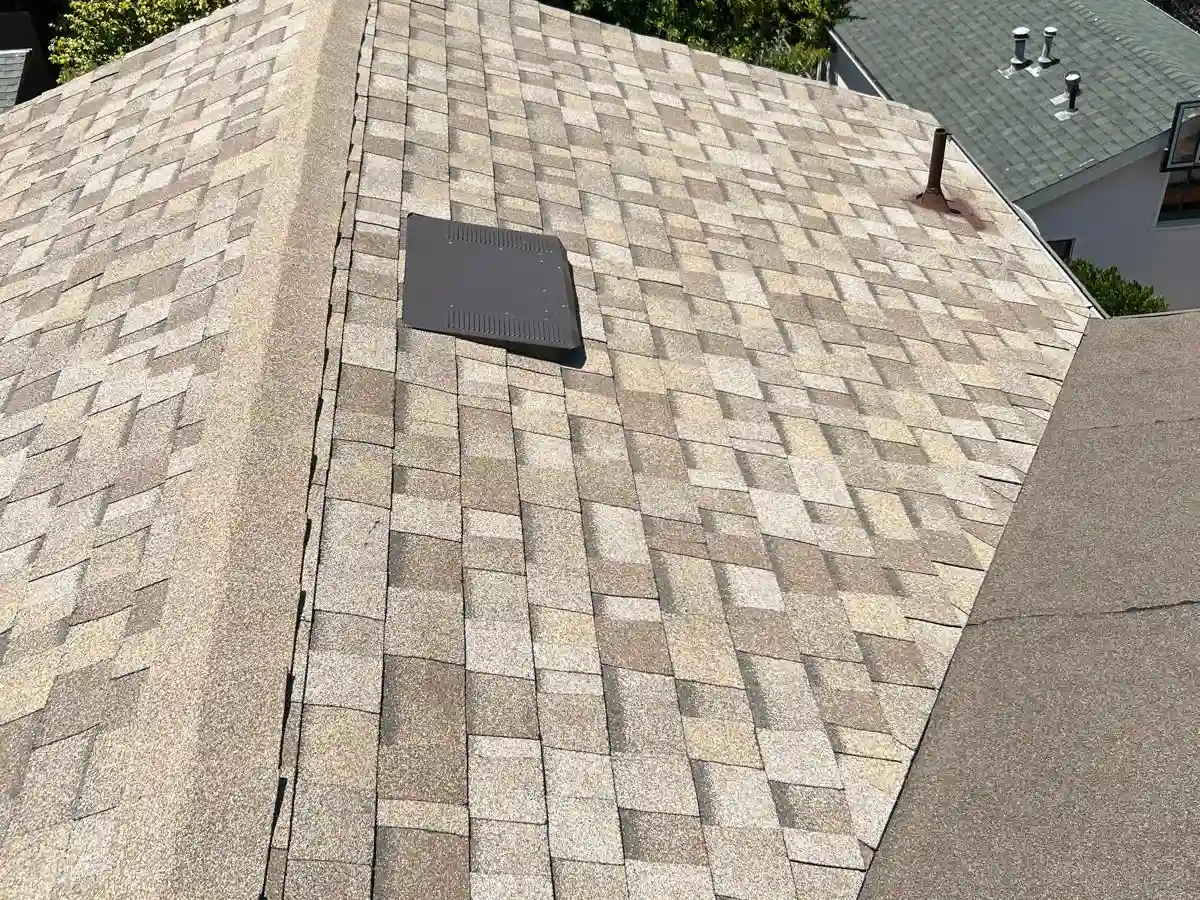
Attic ventilation plays a bigger role in shingle roof lifespan than many homeowners expect. A poorly ventilated attic traps heat and humidity underneath the roof deck, which works against shingles from below at the same time marine layer moisture works against them from above. Proper attic ventilation lets built-up moisture escape rather than condensing under the roof, which meaningfully improves roof performance over the life of the shingles.
Common Reasons Asphalt Shingle Roofs Fail Early
Beyond moisture and ventilation, a handful of common reasons show up repeatedly in early roof failure across Marin.
Poor Roof Pitch and Water Pooling
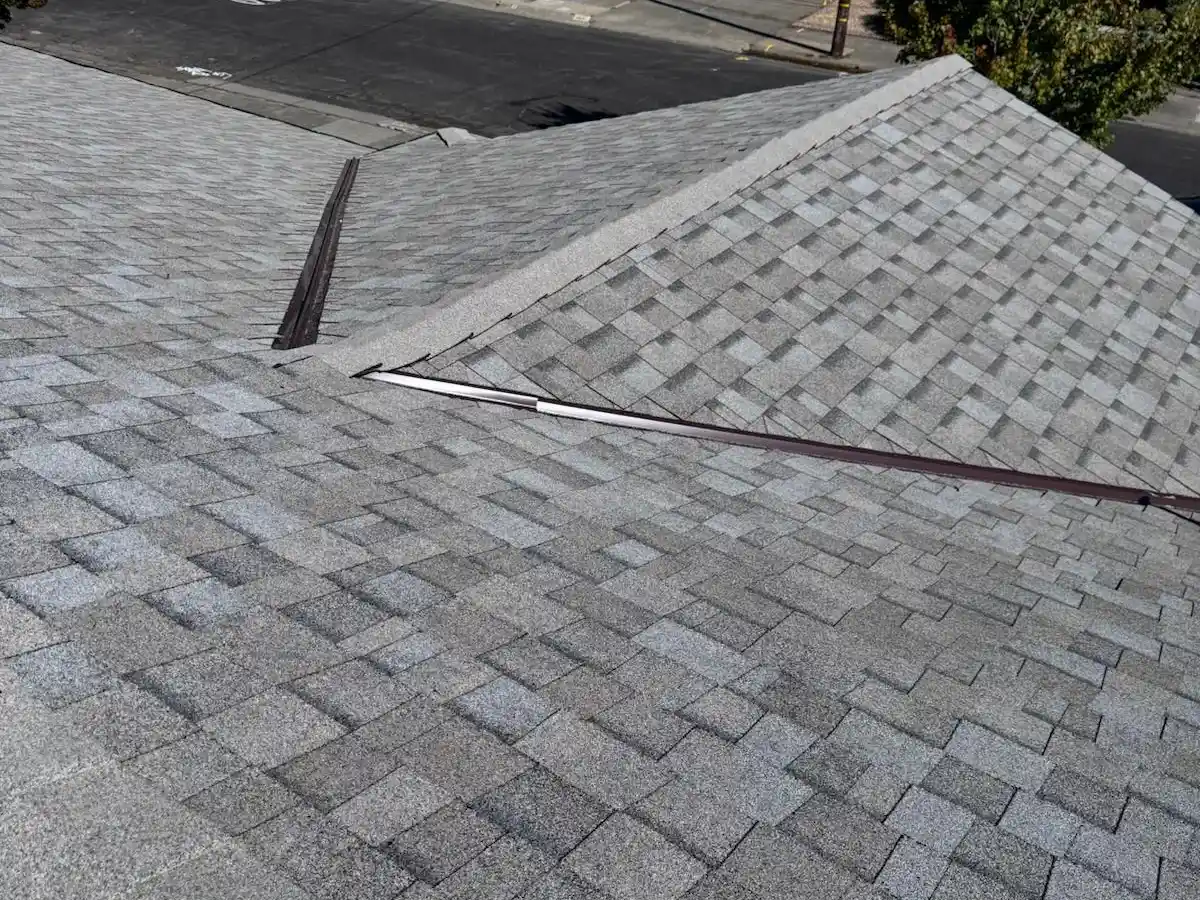
Roof pitch affects how quickly water and marine layer moisture drain off a roof surface. A low roof pitch, or a flat roof section on an otherwise sloped home, allows moisture to pool rather than run off, which accelerates granule loss and shingle deterioration in exactly the spots that stay wet longest.
Natural Wear vs. Premature Roof Failure
It’s worth distinguishing ordinary natural wear from true premature roof failure. Every shingle roof ages and loses some granules over time; that’s expected. Premature failure means a roof is showing significant damage years before its rated life expectancy, and in Marin, that gap is almost always tied back to marine layer exposure rather than a single dramatic event.
Signs of Shingle Damage to Watch For
Common signs of shingle damage include visible granule loss in gutters, curling or cupping shingle edges, dark streaking from algae, cracked or brittle shingles, and soft spots on the roof deck underneath. Catching these signs early, through regular roof inspections, gives homeowners a chance to address shingle damage before it becomes full roof failure.
Choosing the Right Roofing Materials for Coastal Areas
Not all roofing materials perform equally well in Marin’s marine layer climate, which makes material selection one of the most important decisions for modern homes in coastal areas of California.
Architectural Shingles vs. Traditional Tab Shingles
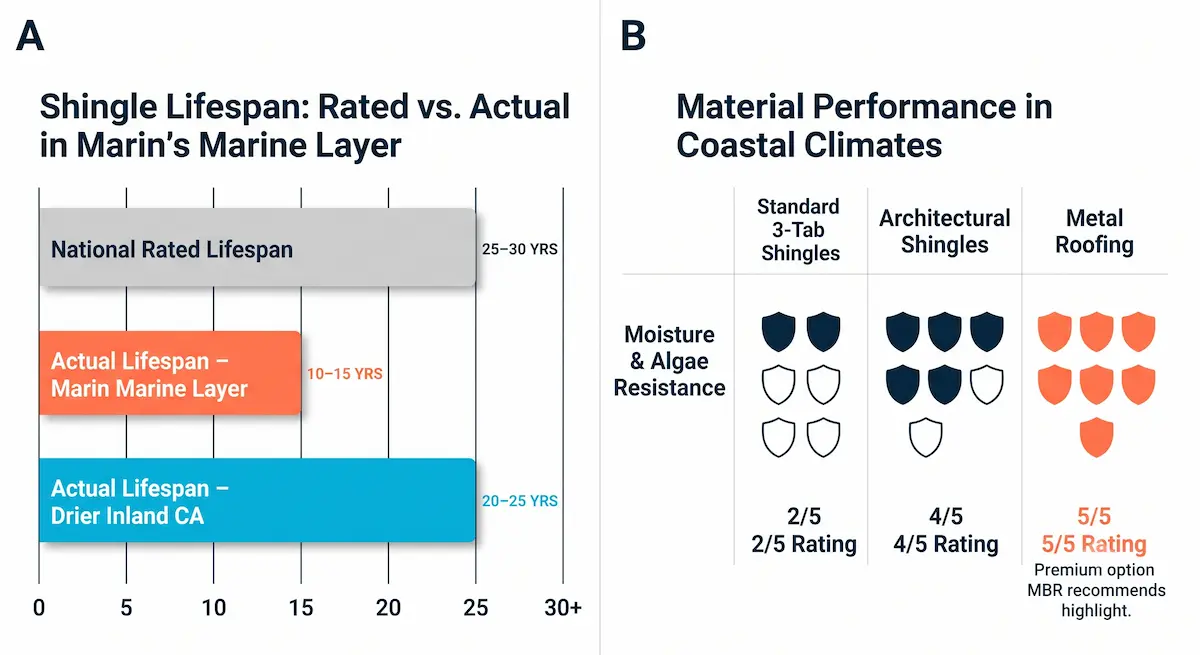
Architectural shingles, sometimes called dimensional shingles, are generally more durable than standard three-tab shingles in coastal climates. Their thicker, layered construction resists curling and granule loss better than older-style tab shingles, making architectural shingles a common upgrade recommendation for marine-layer-exposed homes. Quality shingles with strong algae-resistant coatings offer additional protection against the moisture and algae growth common in this climate.
Metal Roofing and Other Alternatives to Asphalt Roofs
For homeowners who’ve experienced repeated shingle failure, metal roofing is worth considering as an alternative to asphalt roofs entirely, especially in the foggiest coastal pockets of California. Metal roofing sheds moisture more effectively and isn’t vulnerable to granule loss or algae in the same way, though it comes at a higher upfront cost than asphalt shingles.
Shingle Warranties and Life Expectancy in Marin’s Climate
Shingle warranties are typically written based on national averages, not Marin’s specific marine layer conditions, so a shingle rated for twenty-five to thirty years elsewhere may not reach that life expectancy here. Homes just a short drive inland, in warmer, drier parts of California, often see shingles last several more years than the same product on a marine-layer-exposed roof, since they face less daily weather-driven moisture. Reading the fine print on shingle warranties, including any exclusions related to algae or moisture damage, helps set realistic expectations before installation.
How to Extend the Life of an Asphalt Shingle Roof
A few maintenance habits meaningfully extend longevity despite Marin’s climate over the years: keep gutters clear so water drains properly, trim back trees that shade and dampen roof sections, address granule loss and shingle damage early rather than waiting, and confirm attic ventilation is adequate during any roof maintenance visit. None of these steps eliminate marine layer exposure, but together they slow how fast shingles age.
When to Schedule a Professional Roof Inspection
A professional roof inspection is worth scheduling at the first sign of granule loss, algae growth, or curling shingles, rather than waiting for an active leak. In Marin’s climate, roofs benefit from more frequent inspections than the same home might need in a drier part of California, simply because marine layer wear progresses steadily over the years rather than all at once.
Key Takeaways
- Marin’s marine layer keeps roofs damp on a near-daily basis, which accelerates granule loss, algae growth, and premature shingle failure — more so than in drier inland parts of California.
- Attic ventilation and roof pitch both influence how much moisture-related damage a shingle roof experiences over time.
- Architectural shingles and algae-resistant products generally outperform standard tab shingles in Marin’s climate.
- Shingle warranties are based on national averages and often don’t reflect the real-world life expectancy of a roof exposed to marine layer conditions.
- Regular roof inspections catch granule loss and early shingle damage before it becomes full roof failure.
Get a Free Roof Assessment
If your roof is showing granule loss, algae, or curling shingles ahead of schedule, a free roof assessment can confirm whether you’re looking at natural wear or true premature failure — and what roofing materials make sense for your home’s specific exposure to Marin’s marine layer.