Cost
Asphalt Shingles:
Affordability is the #1 reason homeowners choose asphalt shingle roofing. It costs the least upfront, which makes it ideal for those on a tight budget or for those who want a quick and easy replacement. The average cost is between $4.50–$12.25 per square foot but this varies with the type of shingles and size of the roof.
Metal Roofing:
Metal roofing costs more upfront, at between $4 and $30 per square foot, depending on whether you choose aluminum, steel, or copper. The upfront cost may be higher than asphalt, but the long-term savings makes it well worth it when it comes to durability and energy efficiency.
Lifespan and Durability
Asphalt Shingles:
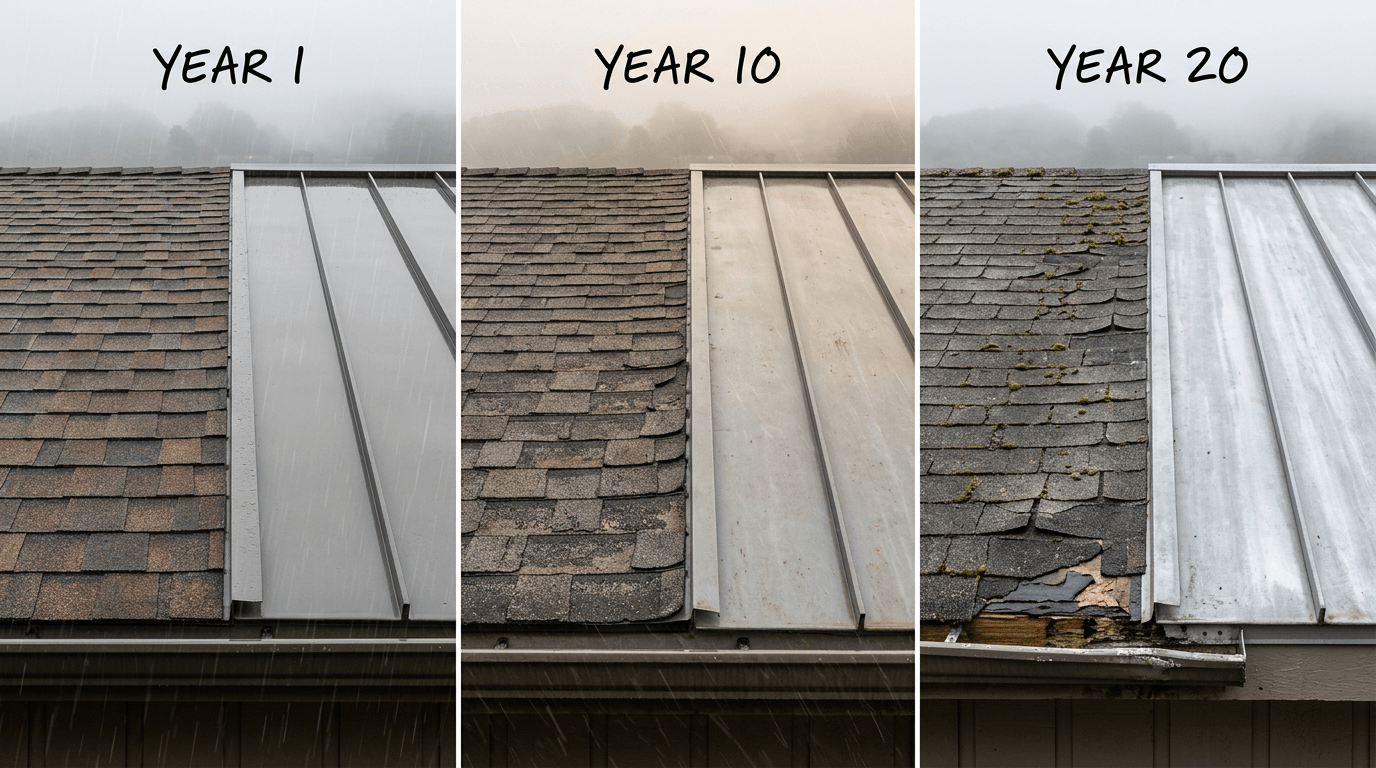
Standard asphalt shingles last between 15 and 30 years depending on the installation, quality, and local weather patterns. In heavy rains, winds, or extreme temperature swings, shingles can deteriorate more quickly. Plus, they are vulnerable to moss and algae when installed in humid regions.
Metal Roofing:
Metal roofs last between 40 and 70 years or more with proper maintenance. They withstand extreme weather better than asphalt shingles, plus they resist cracking, shrinking, and erosion.
Appearance
Asphalt Shingles:
Available in a wide spectrum of colors and textures, shingles match a variety of architectural styles. With the ability to mimic the appearance of slate, tile, or wood shake, asphalt shingles are a versatile choice.
Metal Roofing:
Modern metal roofing comes in panels, shingles, and tiles, and can mimic materials such as wood and slate. With its sleek, modern appearance, metal goes best with contemporary homes. It comes in a lot of colors and custom finishes as well.
Energy Efficiency
Asphalt Shingles:
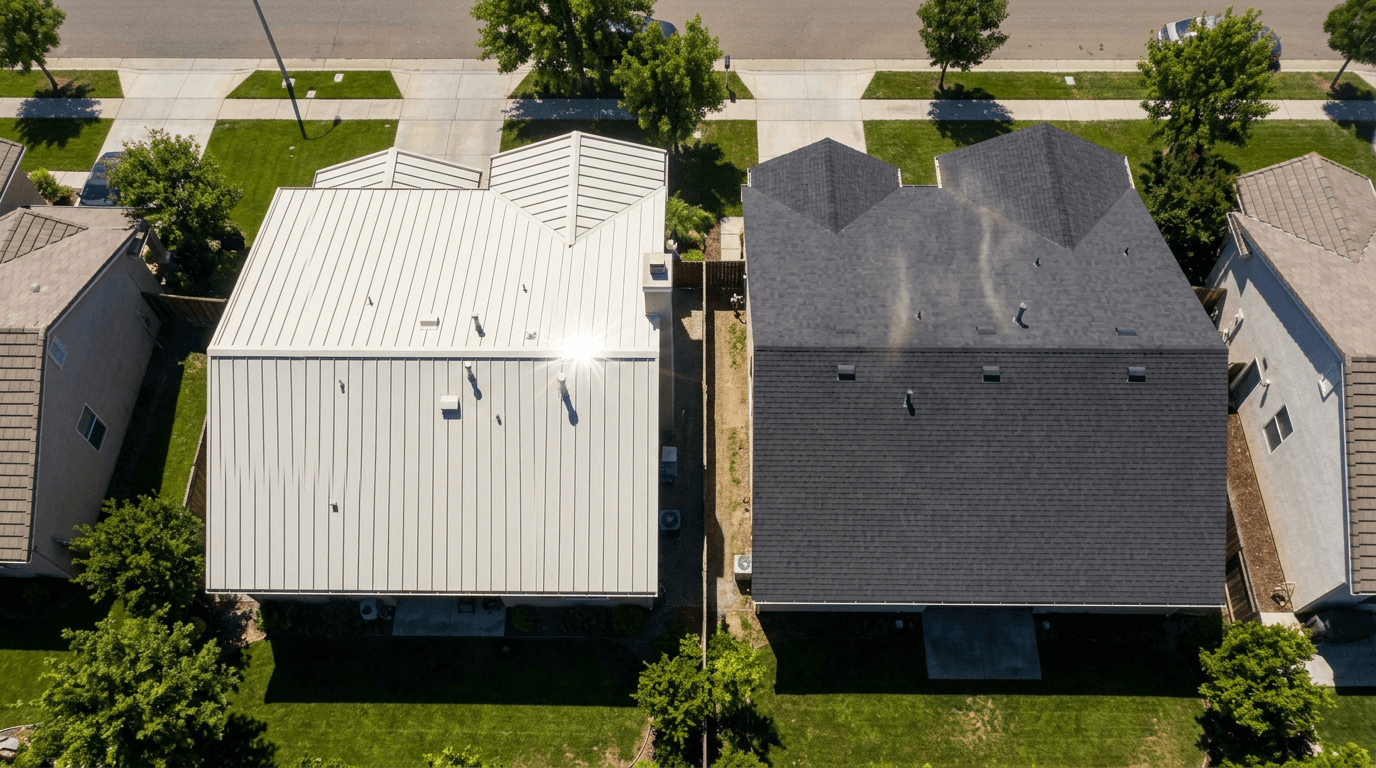
Because they absorb heat, asphalt shingle roofs can increase cooling costs during summer. You can choose reflective shingles that reduce heat absorption, but they cost more and are less common than standard shingles.
Metal Roofing:
As the most energy-efficient roofing material, metal reflects solar radiant heat, which reduces cooling costs – especially when paired with light-colored or coated metal roofs.
Environmental Impact
Asphalt Shingles:
A petroleum-based product, shingles raise environmental concerns due to the manufacturing and disposal processes. They are generally not recyclable at the end of their life, often ending up in landfills. You may start to see more recycled-content shingles on the market.
Metal Roofing:
Made from recycled materials, metal roofs are 100 percent recyclable at the end of their life. This results in fewer replacements and a reduction in overall waste.
Installation and Maintenance
Asphalt Shingles:
Easier and quicker to install, shingles are also easier to repair. They do require more frequent maintenance, though – especially after heavy storms.
Metal Roofing:
Metal roofing installation, a more complex process, requires specialized skills. Yes, metal roofs are more durable, but you will spend more on repairs. Overall, though, they need less routine maintenance and won’t suffer storm damage as quickly as asphalt shingles.
Noise and Comfort
Asphalt Shingles:
Shingles naturally dampen sound, making them quieter during rain or hailstorms.
Metal Roofing:
Metal roofs may be a bit noisy, especially during heavy rains. But with proper insulation and underlayment, you can enjoy minimal noise infiltration.
Resale Value and Insurance
Asphalt Shingles:
A new shingle roof can enhance curb appeal, but it doesn’t offer a huge resale value beyond the installation cost. Some insurance policies may increase premiums for homes located in storm-prone areas.
Metal Roofing:
A metal roof can increase home value thanks to its energy efficiency, longevity, and durability. Some insurance companies give discounts for homes with metal roofing, especially in areas where wildfires or severe weather are common.
Making the Choice
Which Roofing Material Is Better for Bay Area Homes?
Both materials can work well in the Bay Area, but local conditions do favor metal roofing for homes that plan to stay in place long-term.
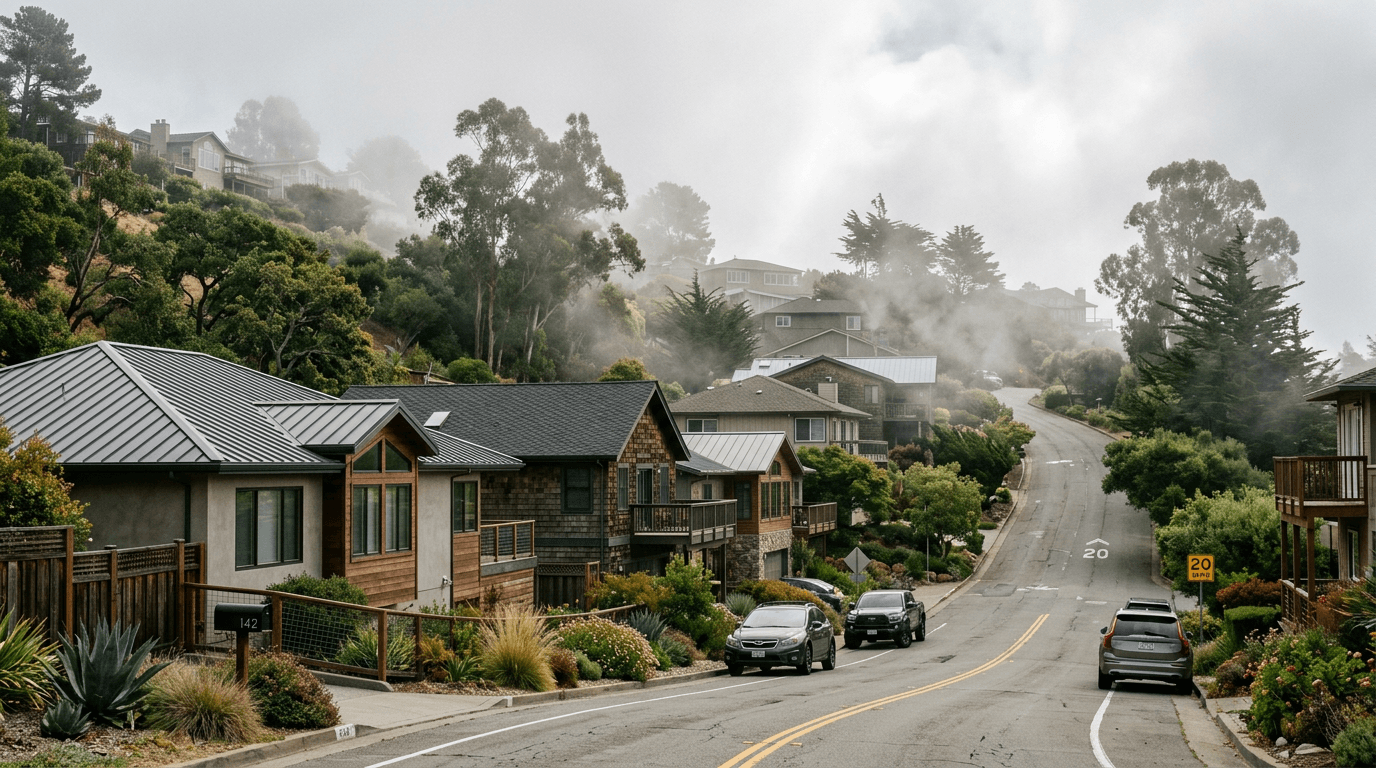
San Francisco and Marin County’s coastal climate creates specific challenges for asphalt shingles. The combination of marine layer fog, salt air from the bay and ocean, and seasonal storm systems accelerates granule loss — the protective coating on asphalt shingles — more quickly than in inland California. Algae and moss growth is also more common in the humidity that Marin hillside homes and foggy neighborhoods like the Outer Sunset experience year-round.
Metal roofing, by contrast, handles these conditions well. Coated steel and aluminum panels resist corrosion, shed moisture cleanly, and are not susceptible to biological growth. The region’s mild temperatures also mean metal’s thermal expansion and contraction is less pronounced than in extreme-climate regions, extending the life of seams and fasteners.
For homes in traditional neighborhoods — the Painted Ladies of the Western Addition, craftsman homes in Mill Valley, or Spanish-style properties in San Rafael — asphalt shingles that mimic slate or tile can maintain architectural character while staying within HOA or historical district guidelines that may restrict metal.
Ultimately, both are viable. The right choice depends on your budget, how long you plan to own the property, and your neighborhood’s aesthetic requirements. Marina Bay Roofing can help you evaluate both options for your specific home and location.
Choosing between asphalt shingles and metal roofing comes down to four factors: budget, how long you plan to own the home, your neighborhood’s aesthetic requirements, and your tolerance for ongoing maintenance.
Choose asphalt shingles if: you need a lower upfront cost, plan to sell within 10–15 years, live in a neighborhood where traditional roofing aesthetics are expected or required by HOA guidelines, or need a faster installation turnaround.
Choose metal roofing if: you plan to own the home long-term, want to minimize maintenance and storm-related repairs, are interested in energy savings on cooling costs, or want to maximize resale value in the Bay Area’s premium real estate market.
For homeowners in San Francisco, Marin County, or the broader Greater Bay Area, our team at Marina Bay Roofing can evaluate your specific home — including local permit requirements, neighborhood guidelines, and roof structure — to help you make the right call.
Get a free roofing consultation