What should you do if your roof is leaking?
If your roof is leaking, follow these steps immediately:
- Contain the water
- Relieve pressure from the ceiling
- Protect your belongings
- Identify the source (if safe)
- Apply a temporary fix
- Contact a roofing professional
Taking quick action can prevent further damage and reduce repair costs.
Step 1: Contain the water
The first priority is stopping water from spreading inside your home.
- Place buckets or containers under the leak
- Use towels or rags to absorb water
- Move nearby furniture and valuables
Even a small leak can spread quickly, especially through insulation and drywall. Acting fast helps limit damage to surrounding areas.
Step 2: Relieve pressure from the ceiling
If water is trapped above your ceiling, it can cause the drywall to bulge or collapse.
What to do:
- Look for sagging or bubbling areas
- Carefully puncture the lowest point
- Let water drain into a bucket
This prevents a sudden collapse, which can cause more damage and create safety hazards.
Step 3: Protect your belongings
Water damage doesn’t stay in one place—it spreads.
- Move electronics and valuables out of the area
- Cover large furniture with plastic
- Avoid placing anything directly under the leak
Protecting your belongings early can prevent unnecessary loss.
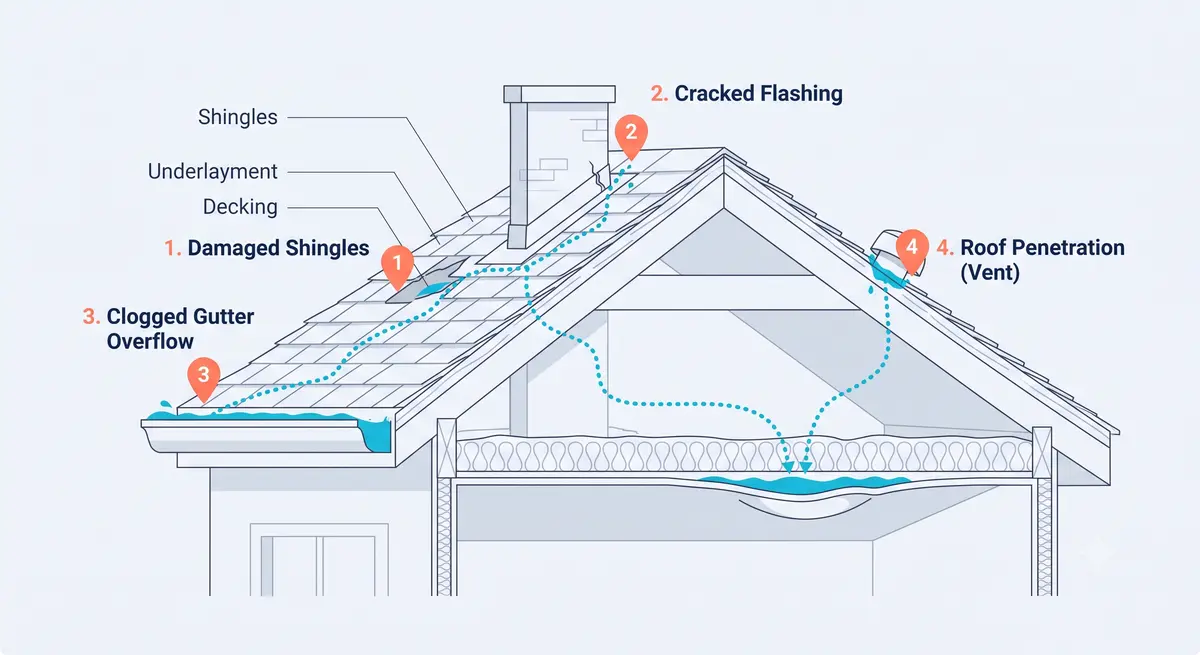
Step 4: Identify the source of the leak (if safe)
If conditions allow, try to locate where the leak is coming from.
Common causes include:
Do not attempt to climb on the roof during rain, high winds, or unsafe conditions.
Step 5: Apply a temporary fix
Temporary fixes can slow or stop the leak until a professional can repair it.
Common options:
- cover the damaged area with a tarp
- apply roofing tape or sealant
- clear debris from gutters to improve drainage
These are short-term solutions and should not replace proper repairs.
Step 6: Contact a roofing professional
The most important step is getting a professional inspection.
A roofing contractor will:
- identify the true source of the leak
- assess the extent of damage
- recommend the correct repair
The sooner you act, the less damage you’ll have to deal with.
Is a roof leak an emergency?
Yes, a roof leak should be treated as an urgent issue.
Even small leaks can:
- damage insulation
- weaken structural components
- lead to mold growth
- increase repair costs
Addressing the issue early prevents more serious problems.
Can a small roof leak get worse?
Yes, small roof leaks almost always get worse over time.
Water can:
- spread behind walls and ceilings
- rot wood framing
- damage insulation
- create hidden structural issues
What starts as a minor drip can quickly turn into a major repair.
What causes roof leaks?
Roof leaks are typically caused by:
- aging roofing materials
- storm or wind damage
- poor installation
- clogged gutters
- damaged flashing around vents or chimneys
Understanding the cause is key to fixing the problem correctly.
How much damage can a roof leak cause?
Roof leaks can lead to:
- ceiling and drywall damage
- insulation saturation
- electrical risks
- mold and mildew growth
- structural deterioration
The longer the leak continues, the more extensive the damage becomes.
Can you fix a roof leak yourself?
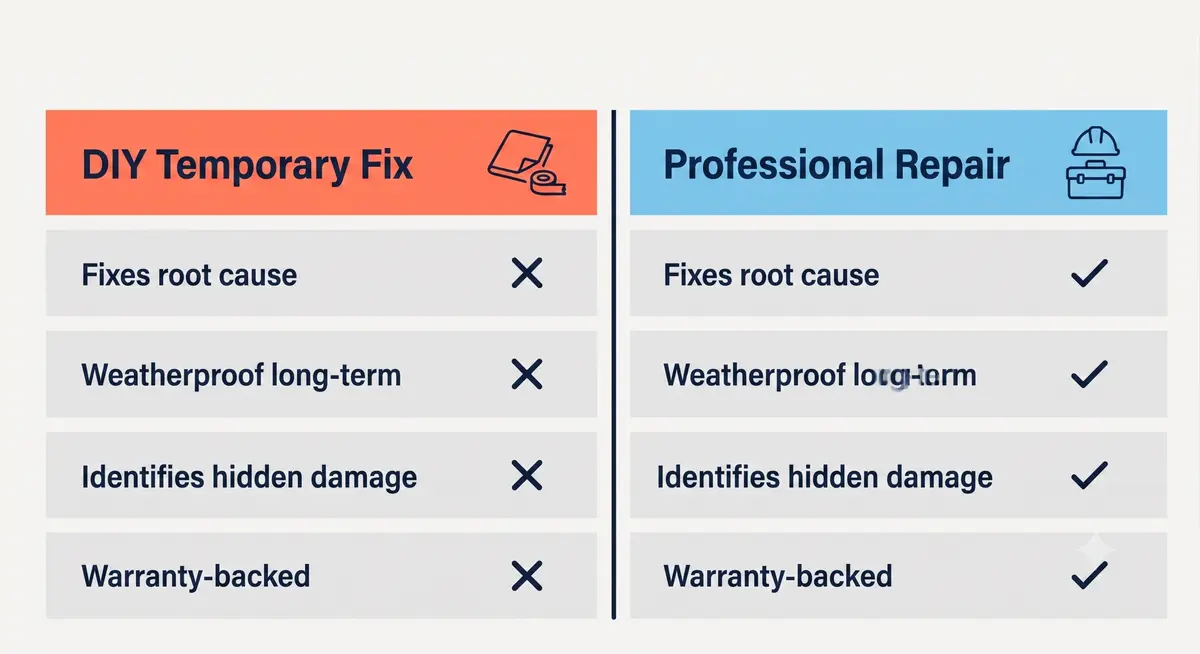
You can apply temporary fixes, but permanent repairs should be handled by a professional.
DIY repairs often:
- fail under weather conditions
- miss the root cause
- lead to repeat issues
A professional ensures the problem is fully resolved.
How quickly should you fix a roof leak?
Roof leaks should be addressed as soon as possible.
Delaying repairs can:
- increase damage
- raise repair costs
- lead to more extensive work
In most cases, you should schedule an inspection within a few days.
Will insurance cover a roof leak?
Insurance may cover roof leaks if caused by sudden damage, such as storms or falling debris.
It typically does not cover:
- wear and tear
- lack of maintenance
A professional inspection can help determine whether your situation qualifies.
How do you know if a roof leak is serious?
Signs of a serious roof leak include:
- active dripping or flowing water
- ceiling sagging or bubbling
- multiple leak areas
- visible structural damage
If you notice these, you should act immediately.
What happens if you ignore a roof leak?
Ignoring a roof leak can lead to:
- major structural damage
- mold growth
- interior damage
- significantly higher repair costs
Small issues rarely stay small when water is involved.
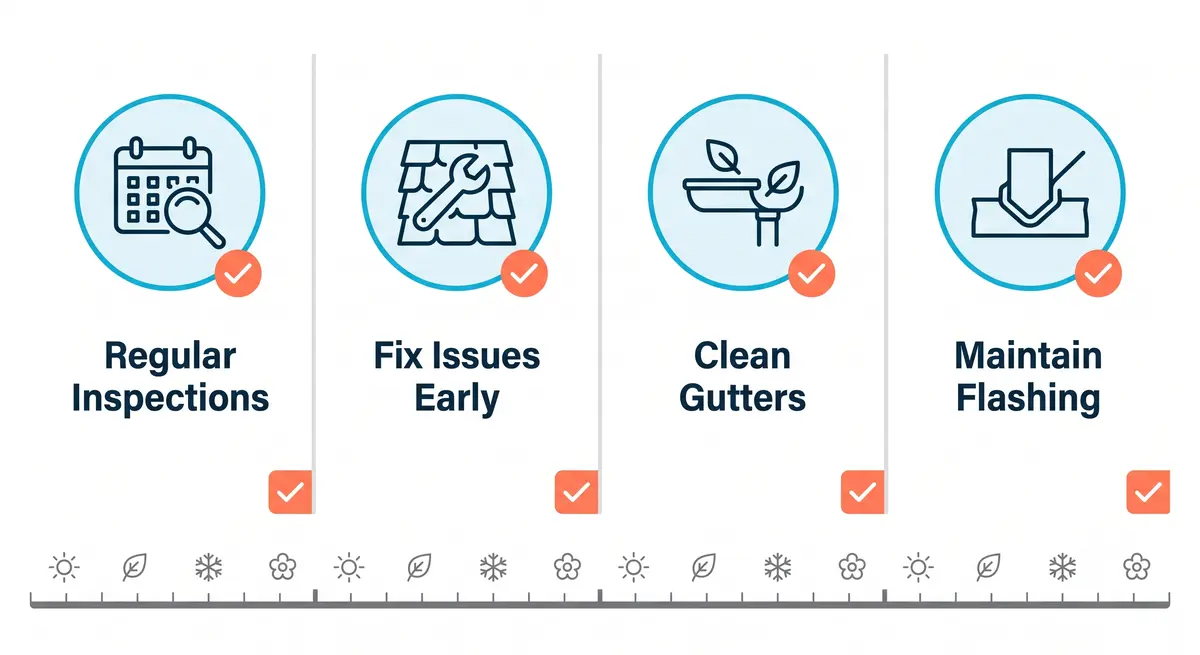
How to prevent roof leaks in the future
To reduce the risk of leaks:
Preventative maintenance extends the life of your roof.
When should you call a roofing contractor?
You should call a roofing contractor if:
- you notice any signs of a leak
- water is entering your home
- your roof has visible damage
- you’re unsure about your roof’s condition
Early action helps avoid costly repairs.
What should you NOT do if your roof is leaking?
Avoid these common mistakes:
- ignoring the leak
- climbing on the roof in unsafe conditions
- relying on temporary fixes long-term
- delaying professional inspection
These mistakes can make the situation worse.
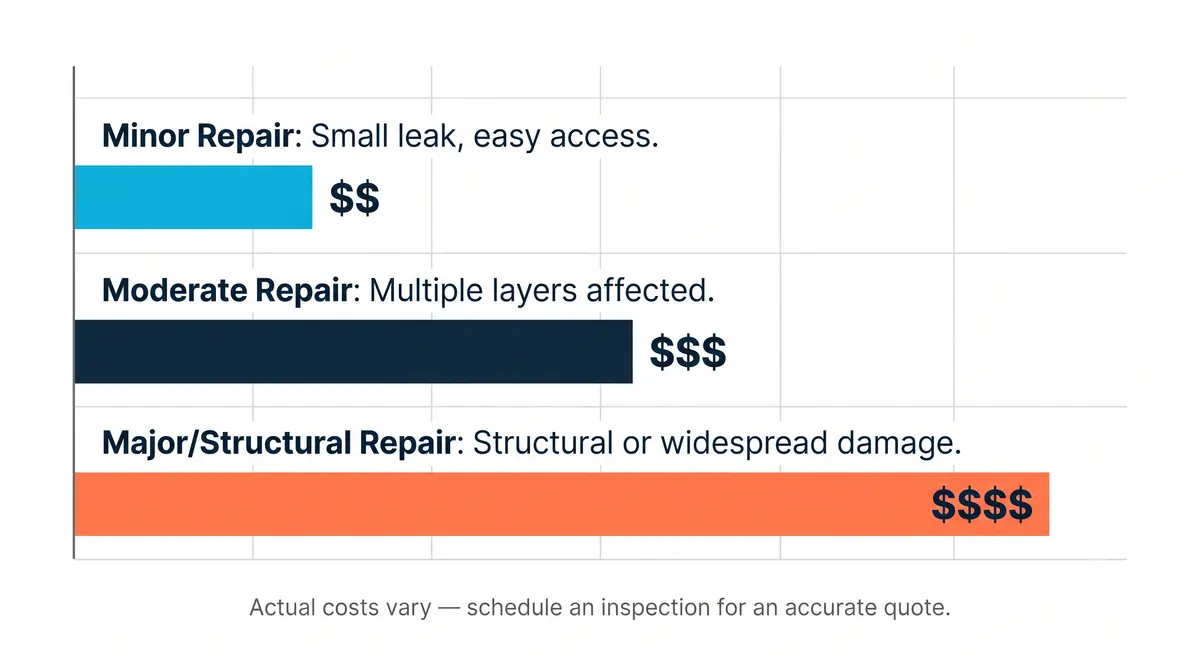
How much does it cost to fix a roof leak?
Roof leak repair costs vary depending on:
- extent of damage
- location of the leak
- roofing materials
- accessibility
Minor repairs may cost a few hundred dollars, while larger issues can cost significantly more. The only way to know for sure is with a professional inspection.
Ready to fix your roof leak?
A leaking roof won’t fix itself—and waiting will only make it worse.
The best next step is to get a professional inspection so you can stop the leak and prevent further damage.
Request a roof inspection and estimate to get a clear solution for your roof.