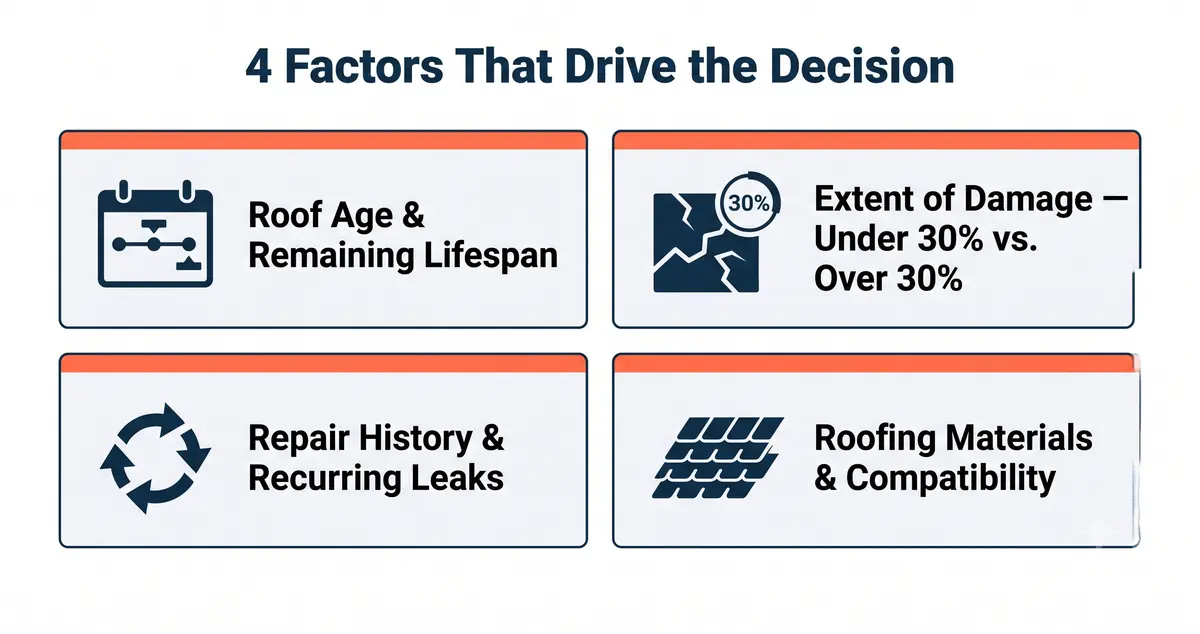
What Shapes a Repair vs. Replacement Decision?
No single variable settles this. Experienced roofers assess the four factors below together before making a recommendation.
1. Roof Age and Remaining Lifespan
Asphalt shingle roofs last 20 to 30 years under typical Marin County conditions. Metal roof systems run 40 to 70 years, and flat roof membranes generally hold 15 to 25 years before major intervention is needed. Once a roof has consumed 75 percent of its expected lifespan, the economics of patch-and-wait change.
A repair bill of $2,000 to $4,000 on a roof with five usable years left rarely makes financial sense. A new roof resets the service clock, restores warranty coverage, and eliminates the accumulating cost of multiple repairs on shingles that are past their prime.
2. Extent of Damage
Roof damage covering less than 30 percent of the surface generally supports repair. Beyond that threshold — especially when it reaches the decking or underlayment — replacement is typically the more defensible call. Common scenarios and what they signal:
- Storm damage (missing or displaced shingles): Repairable if contained to one slope. Widespread wind damage across multiple sections shifts the math toward replacement.
- Hail damage: Granule loss from impact events accelerates UV deterioration across the whole field, often justifying a full insurance claim and replacement rather than a targeted repair.
- Isolated leaks at a single penetration: Repairable when the surrounding shingles are structurally sound.
- Water damage reaching the deck: Once decking is saturated or rotted, the project becomes a full replacement by definition — you cannot safely re-shingle over compromised structure.
3. Repair History and Recurring Leaks
A single event does not indicate a failing roof. But when leaks return to the same location two or three times, the pattern signals systemic deterioration. Repeated patching accumulates cost without fixing the underlying issue. Review your repair history carefully — previous repairs on aging material can also void manufacturer warranties.
One of the more expensive mistakes many homeowners make is treating recurring leaks as unrelated incidents. When mismatched sections from prior repair work cover an increasing share of the roof surface, a simple repair becomes both cosmetically and structurally inadequate. Qualified roofers will identify this pattern during inspection rather than patch around it.
4. Roofing Materials and Compatibility
The roofing materials on your home affect which options are available. On a shingle roof 15 or more years old, finding an exact match for shingles is often impossible — the result is visible patchwork. For a home headed to market, mismatched sections affect both appraisal and buyer inspection outcomes.
For flat roof and metal systems, partial replacement is more structurally demanding. Membrane roofing requires careful seam and overlap integration. Poorly executed repairs on flat roofs are among the most common sources of recurring leaks.
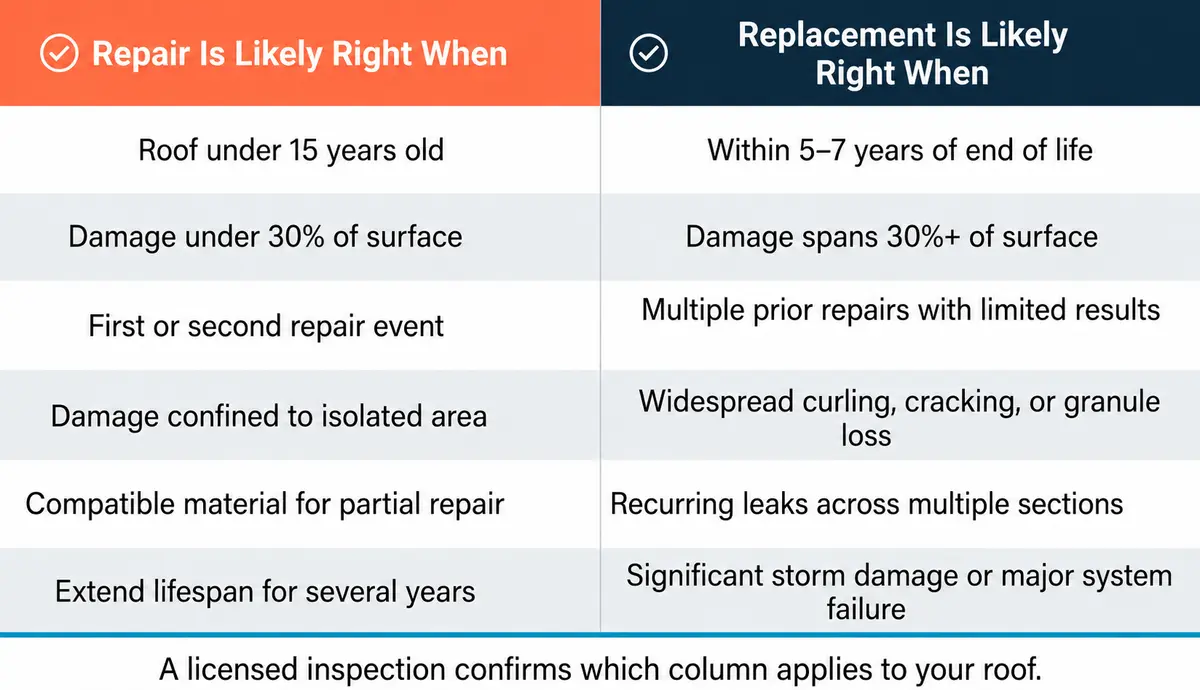
Repair or Replacement: Decision Checklist
Use this checklist before scheduling a roof inspection. It does not replace a professional assessment, but it frames the factors that drive the recommendation.
Repair Is Likely the Right Choice When:
- Roof is under 15 years old (asphalt shingles) or under 25 years (metal or membrane)
- Damage is limited to one slope or one penetration point
- No structural damage or compromised decking
- First or second repair event — no pattern of recurring leaks
- Shingle match is achievable for the affected area
- Insurance covers the event and the scope is clearly defined
Replacement Is Likely the Right Choice When:
- Roof is within 5 to 7 years of expected end of service life
- Damage spans 30 percent or more of the surface
- Multiple prior repairs in the same area with limited results
- Structural damage present: rotted decking, failed underlayment, or compromised rafters
- Leaks continue after previous repair attempts
- Shingle matching is not achievable and appearance matters
- An insurance adjuster has authorized full roof replacement
When Is Full Roof Replacement Unavoidable?
Some conditions make the repair-versus-replace discussion irrelevant. These are the scenarios where experienced contractors recommend replacement regardless of a homeowner’s preference for a simple repair.
Structural Damage to the Deck
Structural damage is the clearest trigger. When water has moved through shingles and underlayment and reached the deck, the underlying structure is compromised. Completing an asphalt shingle roof installation over rotted decking is not a viable repair — it is a liability. The damaged material must be removed before any new roofing materials go on. This is, by definition, a full roof replacement.
Widespread Damage Across the Roof
Widespread damage from a major storm or extended neglect often makes targeted repair economically irrational. When damage is distributed across multiple slopes, the repair cost approaches or exceeds replacement — while replacement delivers a complete new system backed by full manufacturer warranty. Reputable contractors present both scopes with line-item estimates so homeowners can make an informed call.
End-of-Life Roofs and Significant Granule Loss
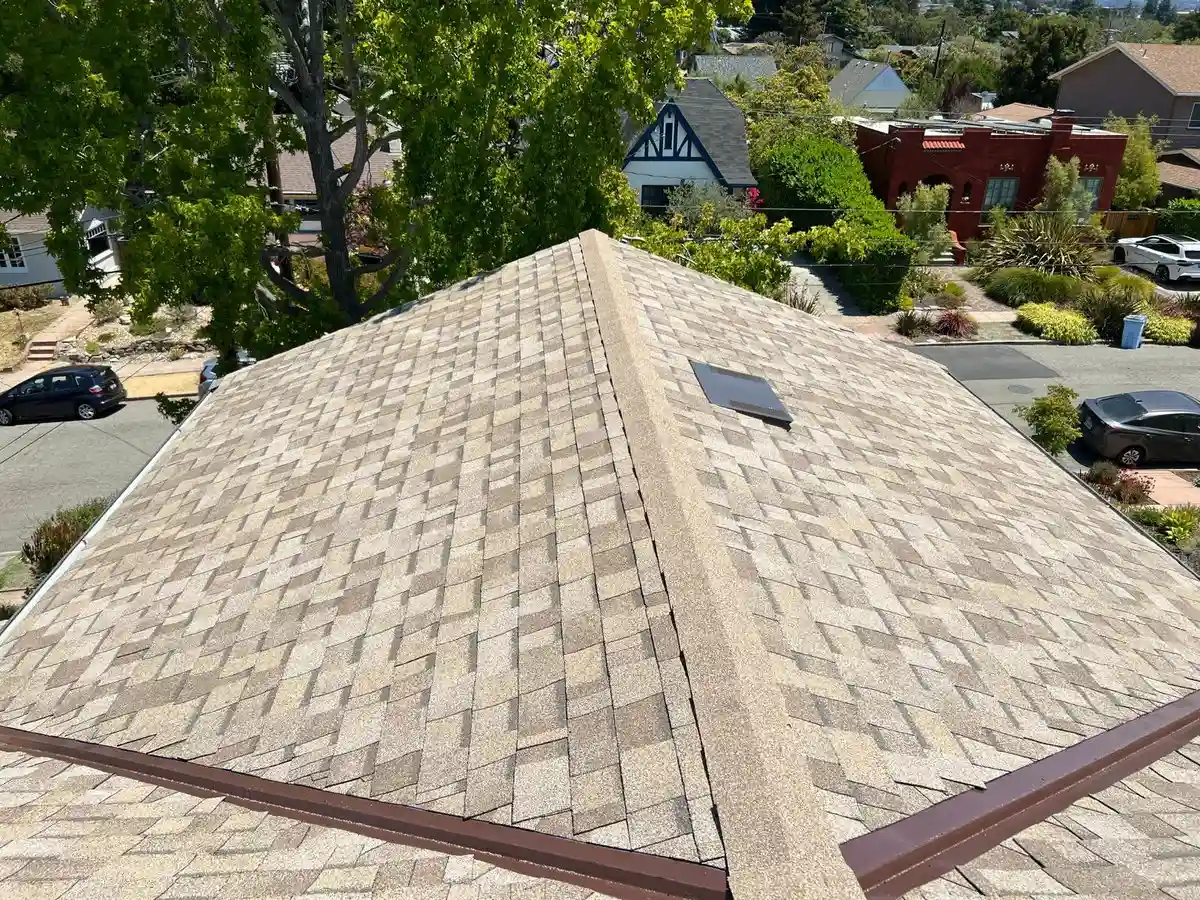
An old roof that has lost granule coverage across the field is past the point where roof repair fixes the underlying problem. Granule loss accelerates UV breakdown of the asphalt layer. When bare spots are visible and granules are collecting in the gutters, replacement decisions are not premature — they are overdue. A patch on this substrate will not hold.
Insurance-Authorized Replacement
Insurance adjusters assess storm damage against replacement cost value (RCV) or actual cash value (ACV) policy terms. When the adjuster’s scope supports full replacement, homeowners are entitled to that scope. Accepting a repair settlement when complete roof replacement has been authorized is not in the homeowner’s interest. Review the adjuster’s written scope with your roofing contractor before agreeing to any reduction in coverage.
How Marina Bay Roofing’s Inspection Process Helps
The right roofing contractor gives you the honest picture, not the answer you hope for. Marina Bay Roofing’s inspection process is built to give Marin County homeowners a complete view of their roof system before any scope is committed.
What Our Roof Inspection Covers
A professional roof inspection from Marina Bay Roofing covers the full set of factors that determine the right path:
- Shingle condition across all slopes: granule coverage, cracking, curling, and displacement
- Flashing integrity at penetrations, valleys, chimneys, and skylights
- Underlayment condition at eaves and exposed transition points
- Deck condition assessed from the attic interior where accessible
- Ventilation adequacy — a primary driver of premature shingle failure in Marin County homes
- Prior repair locations: how many, where, and whether they are holding
Free Roof Inspection for Marin County Homeowners
Marina Bay Roofing provides a free roof inspection for homeowners weighing their options. The inspection produces a written assessment — not a sales pitch — that documents current condition, repair history, and recommended scope. The goal is to give you a documented, honest baseline so your decision is grounded in the actual condition of the roof, not assumptions.
Marin County-Specific Maintenance Factors
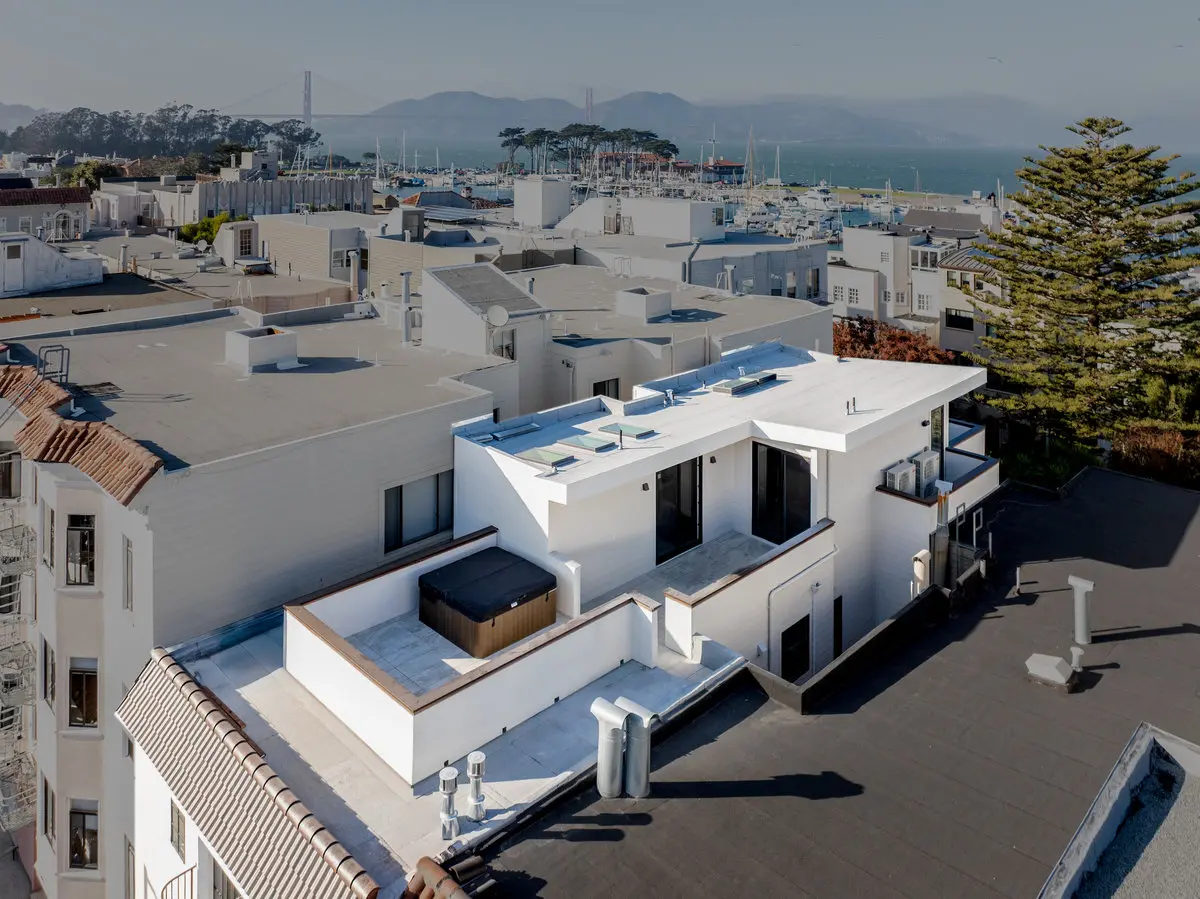
Marin County’s marine layer drives chronic moisture exposure that accelerates granule loss on south-facing slopes, degrades flashing sealants faster than inland climates, and promotes moss growth that retains moisture against the shingle surface. These factors are not visible from the street. They require a trained inspection at roof level and in the attic.
Marina Bay Roofing’s inspectors understand local permit requirements and building codes governing roof replacement across Marin County communities. When full replacement is the right call, we handle the permit process as part of the project.
What Comes After the Inspection
Following the assessment, we provide a written summary that includes:
- Current roof condition by section with supporting photos
- Repair scope if repair is appropriate: materials, labor, and timeline
- Replacement scope if recommended: system options, materials, timeline, and warranty terms
- Insurance guidance if the damage scope may support a claim
Schedule Your Free Roof Inspection Today
If you are evaluating roof repair vs. replacement for your Marin County home, the first step is an honest, documented assessment from a licensed roofing contractor with local expertise.
Marina Bay Roofing serves homeowners throughout Marin County and the San Francisco Bay Area — San Rafael, Mill Valley, Novato, Sausalito, Tiburon, Corte Madera, and surrounding communities. Schedule your free roof inspection today.