Heavy rainfall can really put your roof to the test. Especially during rainy season in the Bay Area, excessive rain can undermine your roof’s structural integrity, resulting in leaks, mold, and exterior and interior damage. On top of that, it can cause gutters and downspouts to overflow, which in turn increases the risk of foundation damage and soil erosion around your property. Fortunately, there are steps you can take to prevent roof damage during the Bay Area rainy season.
From cleaning out your gutters to inspecting your roof regularly, it’s important to work with your Bay Area roofer to ensure your roof can continue to protect your home from the elements no matter the season.
When does the Bay Area rainy season start — and how long does it last?
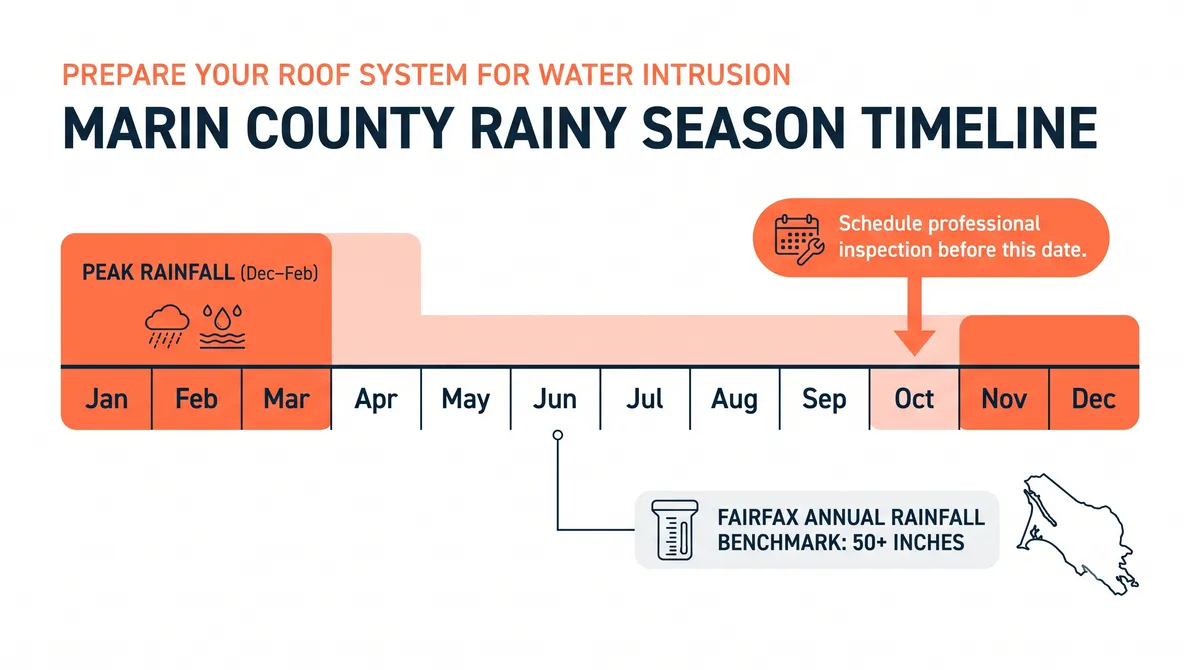
The Bay Area rainy season typically runs from November through April, with peak rainfall occurring in December, January, and February. Marin County and the North Bay receive some of the highest annual precipitation in the region — Fairfax averages over 50 inches per year — making proactive roof preparation especially important for homeowners in San Rafael, Mill Valley, Novato, and surrounding communities. Ideally, a professional roof inspection should be completed by late October before the first storm systems arrive.
Common Roofing Issues During the Rainy Season
You many encounter many roofing issues during the rainy season, the most common of which is a leaking roof. This is caused by holes, missing shingles, or damaged flashing, which can lead to water damage, mold growth, and structural damage. Regular inspections, particularly after heavy rains, will help you identify leaks early on and prevent extensive – and expensive — damage from occurring.
Here’s a look at some of the most common roofing issues during rainy season:
- Deterioration and rot of roofing materials: High humidity and constant exposure to water will weaken the roof structure over time. This can result in sagging or even collapse in the worst cases. Your roof should have the proper ventilation so as to lower moisture levels. In addition, the use of water-resistant materials can also protect against rot.
- Blocked or overflowing gutters: Leaves, twigs, acorns, and other debris can accumulate in gutters, blocking the free flow of water off the roof. This can result in pooling water on the roof, which can then seep into your house. To prevent this, engage in regular gutter cleaning, ideally twice a year in spring and fall.
- Moss and algae growth: These organisms love damp conditions and will eventually cause discoloration and damage to your roofing materials. They also clog your gutters and downspouts. Applying moss and algae-resistant treatments will work to contain this problem.
- Sagging roof: If ignored, the entire roof structure can become weak due to continuous exposure to rain. Sagging signals severe structural damage – something that demands immediate attention. To detect early signs of sagging, schedule regular roof inspections in the Bay Area.
- Damaged shingles: Shingles can become damaged or dislodged due to strong winds and heavy rains, posing the risk of leaks. Immediate replacement of affected shingles as well as regular roof inspections can mitigate this risk.
- Flashing failures: Flashing — the metal strips that seal transitions around chimneys, skylights, vents, and valleys — is the most common point of water intrusion on Bay Area roofs. Continuous thermal cycling from Marin County’s cool, damp winters can cause flashing to lift, crack, or separate from the substrate. A licensed roofer should inspect all flashing seams before the rainy season begins.
- Ponding water on low-slope roofs: Commercial properties and homes with low-slope roof sections are particularly vulnerable to ponding water, which occurs when drainage is insufficient to clear standing water within 48 hours of a storm. Prolonged ponding accelerates membrane degradation and increases structural load. Ensuring scuppers and interior drains are clear before storm season is essential.
Why Marin County Roofs Face Unique Rainy Season Challenges
Not all Bay Area roofs face the same level of weather exposure. Marin County’s marine climate creates conditions that accelerate roofing wear in ways that differ from drier inland areas. Understanding these regional factors helps homeowners make better decisions about maintenance timing, material selection, and when to call a professional.
Marine Layer and Persistent Moisture
Marin County’s proximity to the Pacific means roofs are exposed to high ambient humidity even when it is not actively raining. The marine layer — the low-lying coastal fog that moves inland from the bay and ocean — keeps roofing materials damp for extended periods. This sustained moisture exposure promotes moss and algae growth, accelerates wood deck deterioration, and can compromise the adhesive bonds in asphalt shingles faster than in drier climates like the East Bay or South Bay.
Wind-Driven Rain in the North Bay
Communities along the ridge lines of Marin County, including Fairfax, San Anselmo, and the hills above Mill Valley, experience wind-driven rain events that push water horizontally into roof penetrations, valleys, and under shingles in ways that vertical rainfall does not. Standard inspection protocols should account for these directional exposure points, particularly on west- and south-facing roof sections.
Permit Requirements for Roof Work in Marin County
Homeowners planning pre-season roof repairs or replacements in Marin County should be aware that most roofing work — including full re-roofs and significant structural repairs — requires a permit from the applicable city or county building department. In unincorporated Marin County, permits are issued through the County of Marin Community Development Agency. Cities such as San Rafael, Mill Valley, and Novato have their own permitting offices. Working with a licensed roofing contractor ensures that all permit applications, inspections, and code compliance requirements are handled correctly.
Preventive Measures
Prevention is always better than cure. Heed these tips on how to prevent roof damage during the rainy season before it has a chance to start.
- Regular Roof Inspections: This is the best way to ensure your roof remains in good condition all year long. This allows roofers to identify potential weaknesses and concerning signs of wear and tear that, if not addressed in a timely manner, could lead to larger issues later on when the heavy rains come. Bay Area roofers are trained in spotting subtle signs of damage that the average homeowner can’t see. After thorough inspection, they can suggest appropriate corrective measures.
- Roof Maintenance and Repair: If any cracks, leaks, or weak spots are detected, they should be fixed immediately. From sealing leaks to reinforcing weak areas to cleaning out gutters, regular maintenance and timely roof repair can catch issues early on before they become a more invasive problem later. This also includes prompt replacement of missing or damaged shingles, which can introduce leaks to your home if ignored.
- Treatment of Moss and Algae: Moss and algae growth is particularly prevalent during rainy season. It’s important to properly treat this invasive growth before it spirals out of control. Moss and algae can eat away at your roofing materials if left unchecked. Be sure to regularly clean and treat your roof with moss and algae-resistant products to keep the situation under control.
- Reinforcement of the Roof Structure: An effective preventive measure is to reinforce the roof structure itself. This process can involve strengthening the supports, adding extra braces, and replacing rotting wood. Once reinforced, your roof will be better able to withstand the extra weight of debris and water that comes with rainy season.
In the end, addressing roofing issues during the rainy season will take a combination of proactive maintenance, immediate action, and professional help. While homeowners can tackle some roof maintenance on their own, it’s always wise to partner with a professional roofer in the Bay Area to provide safe and effective roofing solutions.
Bay Area Rainy Season Roof Preparation Checklist
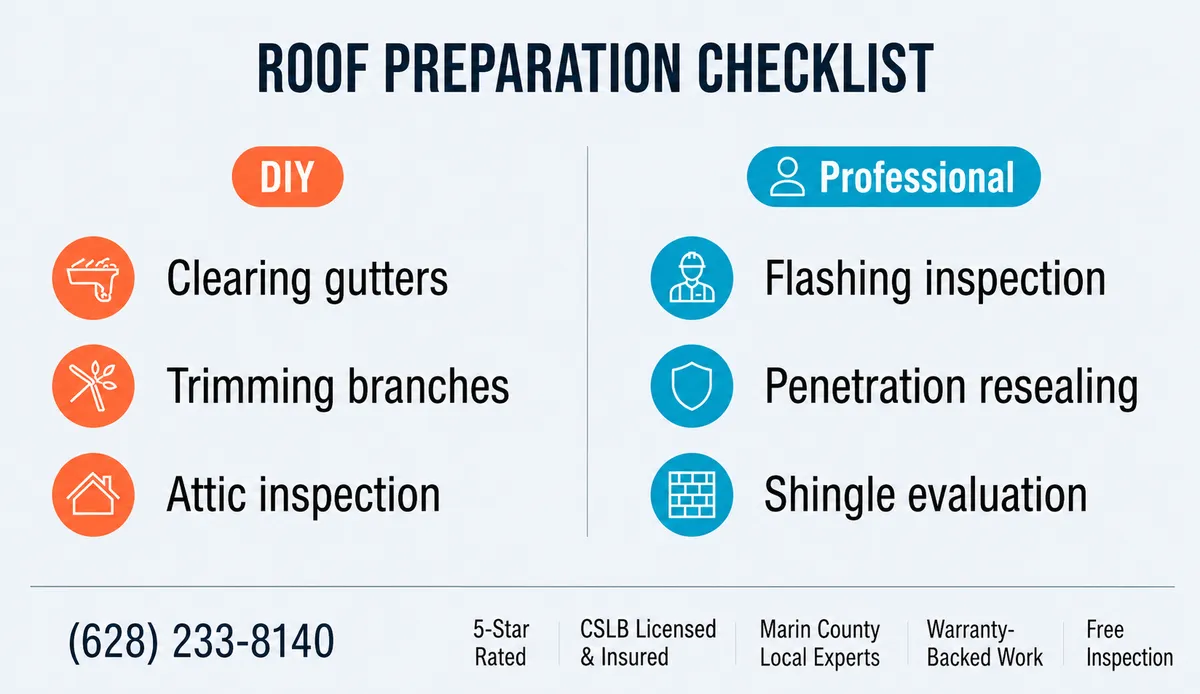
Use this checklist as a practical framework for preparing your roof before storm season. Items marked for professional inspection should be completed by a licensed Bay Area roofing contractor, not a general handyman.
- Inspect attic for signs of moisture intrusion: Dark staining on rafters or sheathing, soft wood, or musty odors indicate active or prior leaks. This step should be completed indoors before any exterior inspection.
- Clear gutters and downspouts completely: Remove all debris from gutter channels and verify that downspouts discharge water at least three feet from the foundation. Splash blocks or extensions may be required on flat or low-grade lots.
- Inspect and reseal all flashing points (professional): Chimney flashing, skylight perimeters, vent pipe boots, and valley metal should be inspected for separation, rust, or failed sealant. This is the highest-risk failure point on most Bay Area roofs.
- Check shingle condition for curling, cracking, or missing tabs: Shingles that are visibly lifting, curling at the edges, or missing granules are vulnerable to wind-driven rain infiltration. Any damaged shingles should be replaced before the first storm.
- Trim overhanging tree branches: Branches that overhang the roof deposit debris into gutters and can cause direct impact damage during wind events. Trees within striking distance of the roofline should be assessed each fall.
- Test all roof penetration seals (professional): HVAC vents, exhaust fans, and electrical conduit penetrations should be resealed if caulking has shrunk or separated. A licensed roofer can identify compromised seals that are not visible from the ground.
- Verify attic ventilation is unobstructed: Blocked soffit or ridge vents trap moisture inside the attic cavity, accelerating wood rot and sheathing deterioration. Insulation should not cover soffit vent channels.
Warning Signs That Require Immediate Professional Attention
Some roofing conditions cannot wait for a scheduled inspection. If you observe any of the following after a storm or during wet weather, contact a licensed Bay Area roofing contractor as soon as possible:
- Active water dripping or staining inside the home: Any interior water intrusion during or after a rain event indicates a compromised roof system and should be addressed immediately to prevent mold growth and structural damage.
- Visible daylight through the attic ceiling: Gaps in the roof deck or missing shingles that allow light into the attic also allow water intrusion and require emergency repair.
- Sagging or soft spots in the ceiling or roof deck: These indicate water-saturated materials or structural compromise and represent a safety concern that requires urgent professional evaluation.
- Large volumes of granules in gutters or downspouts: Granule loss signals that asphalt shingles are reaching the end of their effective lifespan and may no longer provide adequate waterproofing.
Get a Quote From Marina Bay Roofing Today
Call now to schedule a free roof inspection and quote on roofing services in the Bay Area.