Why a Roof Inspection Matters for Bay Area Homes
A roof inspection does more than identify obvious issues. It gives you a clear picture of your roofing system’s condition, performance, and long-term reliability.
In the Bay Area, environmental factors like coastal air, hillside exposure, and seasonal storm activity can accelerate wear. That’s why regular inspections are essential—not just reactive.
A well-timed inspection helps homeowners:
- Catch early signs of damage
- Prevent costly repairs
- Maintain roofing warranties
- Plan for future replacement
What to Expect When Getting a Roof Inspection and Estimate
At its core, a professional roof inspection is a structured evaluation of your entire roofing system.
You can expect three key phases:
- A thorough inspection of exterior and interior components
- Documentation of damage and performance issues
- A clear, written roofing estimate outlining next steps
A reliable roofing contractor will guide you through each step, explaining findings in plain language and helping you understand your options.
Step 1: Initial Consultation and Property Review
Before the actual inspection, most roofing inspectors begin with a quick conversation.
They’ll ask:
- Have you noticed leaks or roof damage?
- Has your home experienced recent storm damage?
- When was your last roof inspection?
This step helps the inspectors focus on areas that may need closer attention.
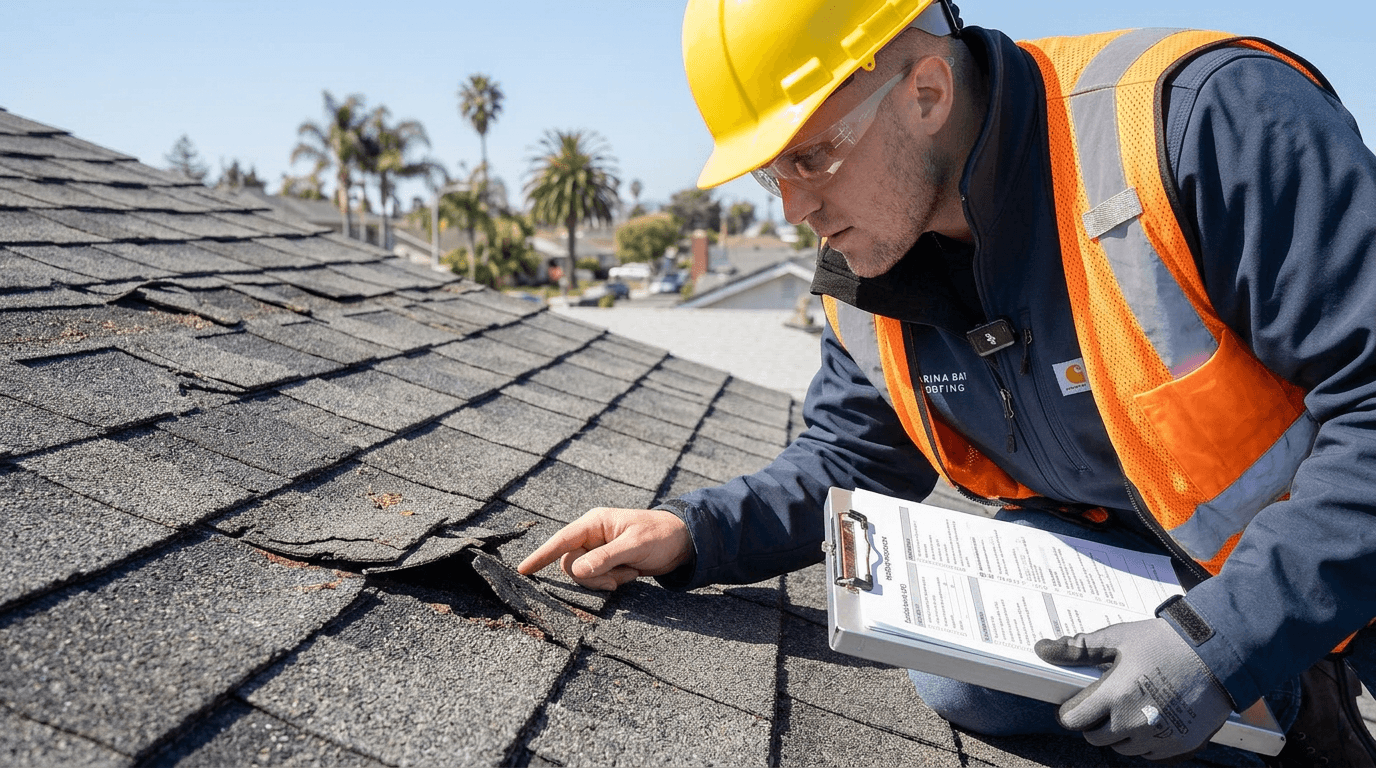
Step 2: Exterior Roof Inspection
The exterior inspection is where most visible issues are identified.
What Inspectors Look for on the Roof Surface
During this part of the inspection process, inspectors evaluate the roof surface for:
- Missing or damaged shingles
- Cracked or curling shingles
- Signs of storm damage
- Moss or algae growth
- Improper previous repair work
Even minor surface issues can lead to deeper structural concerns if left unaddressed.
Step 3: Checking Flashing, Valleys, and Penetrations
Flashing protects the most vulnerable parts of your roof.
A professional roof inspection will carefully assess:
- Chimney flashing
- Skylights
- Roof vents
- Valleys where water collects
These areas are common sources of leaks and hidden damage.
Step 4: Gutter and Drainage Evaluation
Water management is critical for long-term roofing performance.
Your inspection will include:
- Gutter condition
- Downspout flow
- Signs of pooling water
Poor drainage can lead to structural damage and premature replacement needs.
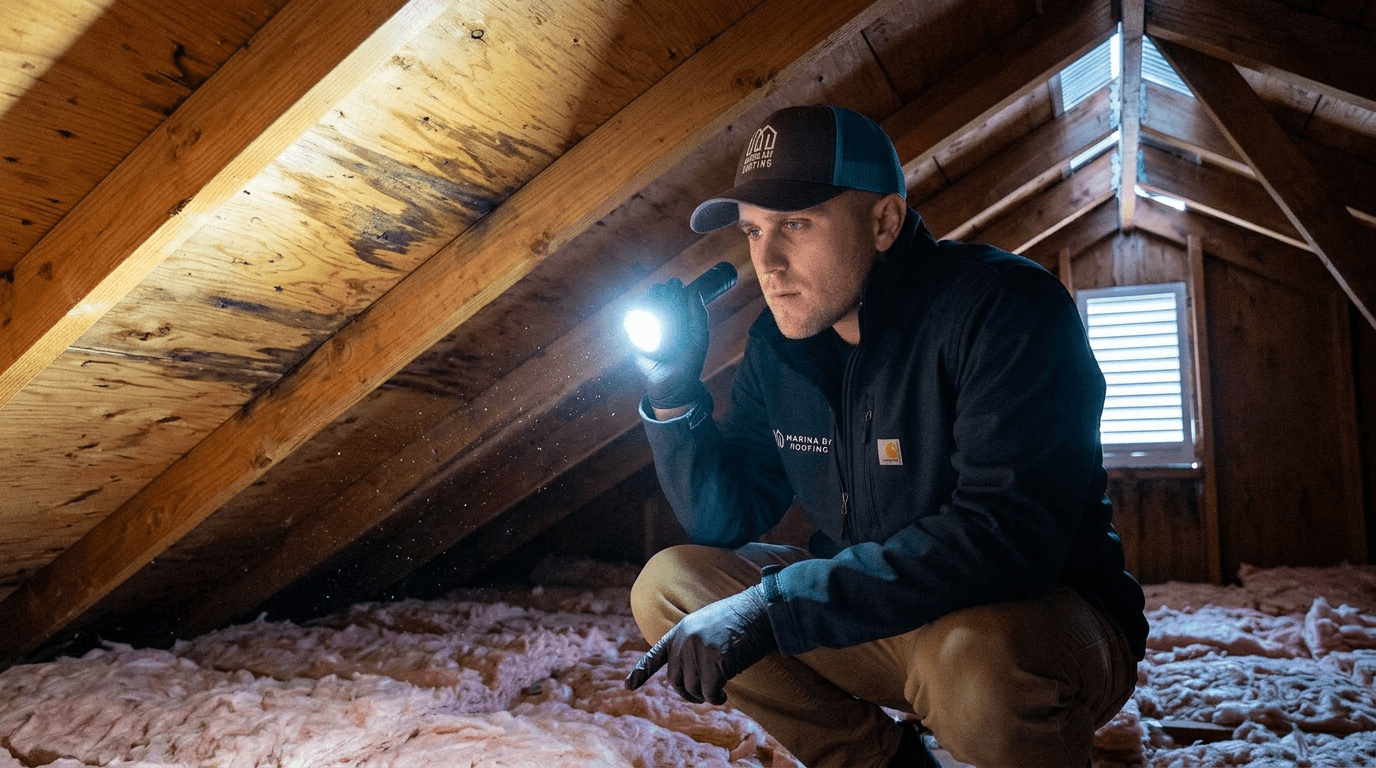
Step 5: Interior Inspection and Attic Assessment
A complete inspection includes an interior inspection, often inside your attic.
Why the Attic Inspection Matters
Inside your attic, inspectors look for:
- Water stains and roof leaks
- Mold or moisture buildup
- Proper insulation
- Ventilation issues
An attic inspection reveals problems you won’t see from the outside—but that directly impact your roof’s integrity.
Step 6: Insulation and Ventilation Review
Proper insulation and airflow are essential for roof maintenance.
Without it, heat and moisture can:
- Warp shingles
- Cause condensation
- Shorten the lifespan of your roofing materials
This part of the inspection helps ensure your system performs efficiently year-round.
Step 7: Identifying Visible and Hidden Damage
A detailed roof inspection focuses on both obvious and subtle issues.
Common Signs of Damage
- Cracked or missing shingles
- Soft spots on the roof
- Water intrusion
- Sagging areas
Experienced roofing inspectors know how to detect hidden damage that could lead to extensive repairs later.
Step 8: Structural Integrity Check
Your roof’s integrity is about more than surface materials.
A comprehensive inspection evaluates:
- Decking stability
- Load-bearing structures
- Signs of long-term structural damage
This is especially important for older homes in Marin County and San Rafael.
Step 9: Photo Documentation and Reporting
Professional roof inspection services include detailed documentation.
You should receive:
- Photos of problem areas
- Notes on damage
- A clear inspection checklist
This transparency helps homeowners understand exactly what’s happening on their roof.

Step 10: The Roofing Estimate Explained
After the inspection, you’ll receive a written estimate.
What’s Included in a Roofing Estimate
- Scope of repair or replacement
- Material recommendations
- Labor details
- Timeline
- Total cost
A trustworthy roofing contractor will walk you through the estimate and answer any questions you have.
Repair vs. Roof Replacement: What Determines the Outcome?
Not every inspection leads to a roof replacement.
When Repair Is Enough
- Minor damage
- Localized issues
- Newer roofing systems
When Replacement Is Recommended
- Widespread damage
- Aging materials
- Recurring leaks
In some cases, a full roof replacement is the safest long-term solution.
Understanding Roof Insurance Claims
If your inspection reveals storm damage, you may need to file a roof insurance claim.
What to Expect
- Documentation from your inspection
- Communication with your insurance provider
- Approval for covered repairs
A knowledgeable roofing contractor can help guide you through the insurance claim process.
The Value of Professional Roof Inspections
While some home inspectors include basic roof checks, a professional roof inspector provides a deeper level of expertise.
Why Professional Inspections Matter
- More accurate diagnosis
- Better documentation
- Reliable recommendations
This reduces the risk of missed issues and unexpected costly repairs.
Roof Maintenance After the Inspection
Once your inspection is complete, ongoing maintenance is key.
Simple Maintenance Tips
- Keep gutters clear
- Trim overhanging branches
- Schedule routine inspections
Consistent maintenance protects your investment and extends your roof’s lifespan.
Choosing the Right Roofing Contractor
Not all roofing contractors are the same.
What to Look For
- Licensing and insurance
- Strong local reputation
- Experience with Bay Area homes
- Clear, detailed estimate
A trusted partner will prioritize long-term performance—not just quick fixes.
Final Thoughts: Protecting Your Home Starts with the Right Inspection
A roof inspection isn’t just a checklist—it’s a critical step in protecting your home.
For homeowners in San Francisco, Marin County, and San Rafael, working with experienced roofing inspectors ensures your roof is built to handle local conditions and meet California standards.
When done right, a professional roof inspection gives you:
- Clarity about your roof’s condition
- Confidence in your next steps
A clear path forward—whether that’s repair or replacement