The 50% Rule: A Practical Starting Point
A widely used benchmark in commercial roofing is the 50% rule: if the estimated cost of repairs exceeds 50% of the cost of a full replacement, replacement is almost always the better financial decision. For a Bay Area commercial property owner, this threshold matters because repair costs in the region run higher due to permitting requirements, labor rates, and the complexity of coastal construction. A professional inspection is the only reliable way to get accurate numbers — but the 50% rule gives you a framework to evaluate contractor recommendations with confidence.
Understanding Your Commercial Roof and Why It Matters
A commercial roof is more than a surface covering. It’s a complete roof system designed to protect a commercial building from water intrusion, heat loss, and structural damage.
Most Bay Area properties use flat roof designs paired with specific commercial roofing systems. Common options include modified bitumen, epdm roofing, and other roofing membranes designed for durability.
Knowing the type of roofing on your building helps clarify what kind of roof work is possible and how long the roof is expected to last.
How Roofing System Type Affects the Repair vs Replacement Decision
The commercial roofing system installed on your building directly influences how long repairs remain viable — and when replacement becomes the only reliable option.
TPO (Thermoplastic Polyolefin): TPO membranes are highly repairable when damage is caught early. Seam failures, punctures, and surface cracks can be heat-welded or patched cost-effectively. However, TPO systems that have been heat-welded more than twice in the same location typically indicate a systemic problem that repair cannot resolve.
Modified Bitumen: This system is durable and widely used on Bay Area commercial buildings. Modified bitumen can be patched with compatible materials, but aged systems (15 years or older) often become brittle and are difficult to adhere new patches to reliably. At that stage, a full replacement is typically more cost-effective than continued patchwork.
EPDM (Ethylene Propylene Diene Monomer): EPDM is one of the more repair-friendly systems available. Adhesive patches can address most punctures and minor seam failures. Full replacement is generally recommended when EPDM reaches the end of its rated lifespan — typically 20 to 30 years — or when shrinkage pulls the membrane away from flashing and parapet walls across multiple locations.
Built-Up Roofing (BUR): Multi-layer systems can absorb significant localized damage before requiring full replacement. However, moisture infiltration between layers is difficult to detect without infrared scanning, and wet insulation within a BUR system accelerates decay throughout the assembly. When in doubt, commission a moisture survey before committing to repair.
Commercial Roofing Options: Repair or Replacement?
When issues appear, most business owners ask the same question: should we invest in roof repair, or is it time for a full replacement?
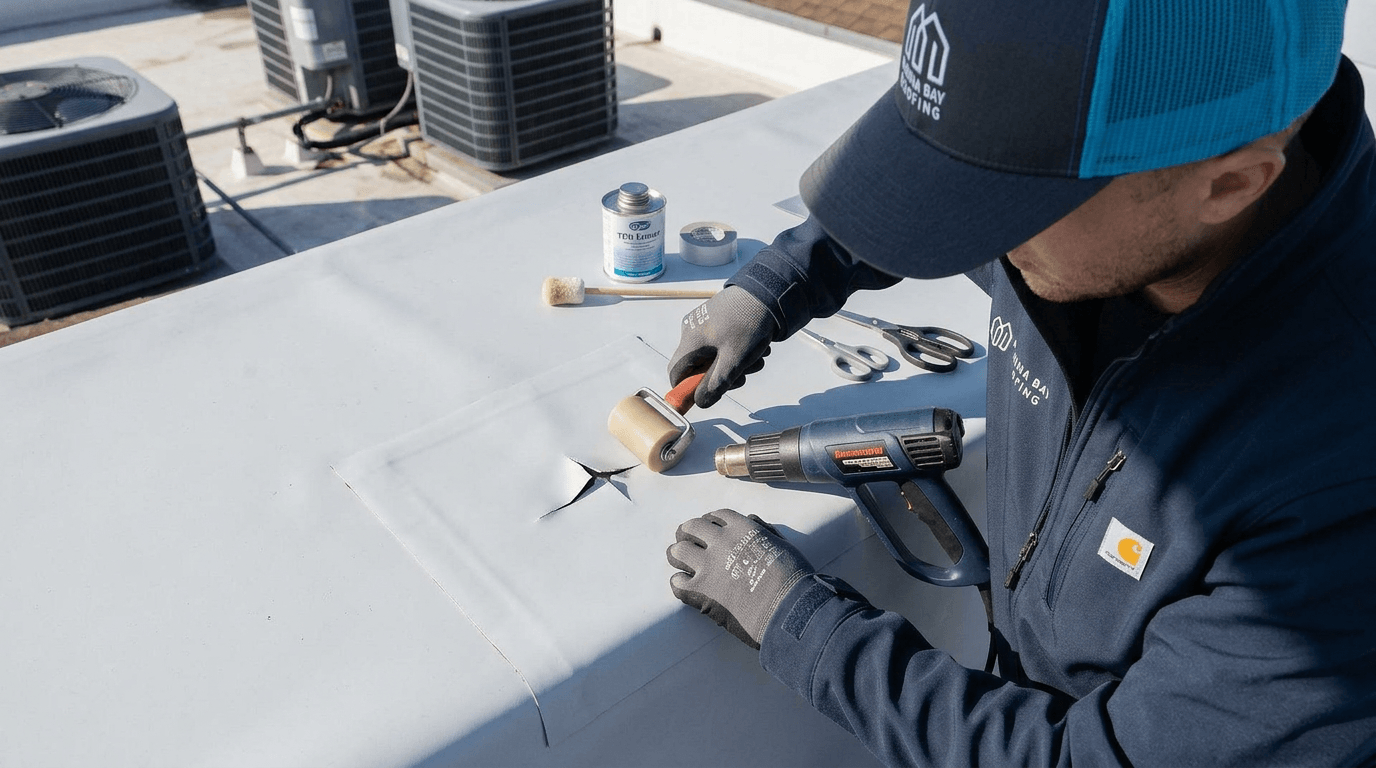
Commercial Roof Repair: When It Makes Sense
A commercial roof repair is often appropriate when:
- The roof age is relatively young
- Roof damage is isolated
- There are minor roof leaks
- The underlying structure remains sound
In these cases, targeted repair can extend the lifespan of the roof without major disruption to the building.
However, frequent repairs are a warning sign. Repeated fixes increase cost over time and may point to deeper system failure.
When Roof Replacement Is the Smarter Investment
A roof replacement becomes the better option when damage is widespread or the system is nearing the end of its lifespan.
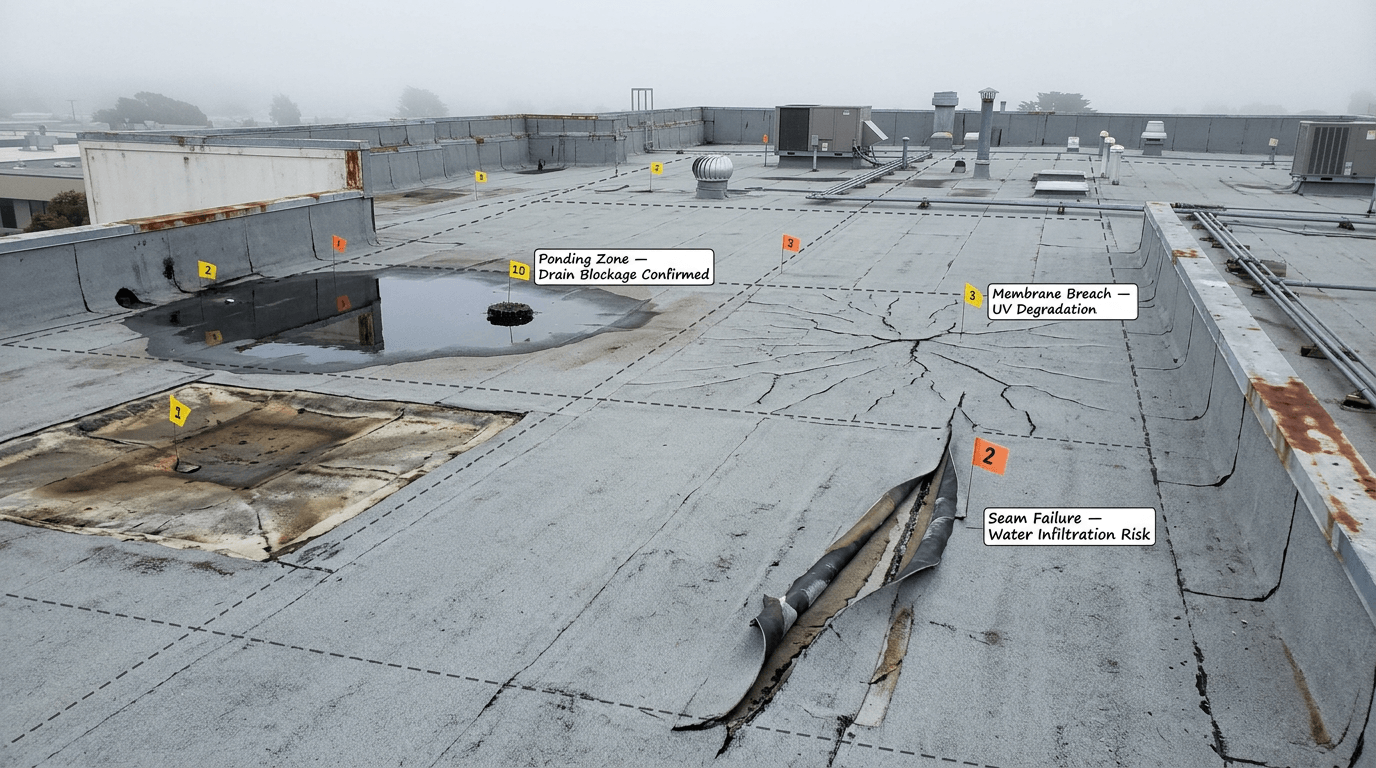
Signs You May Need a Commercial Roof Replacement
- Persistent leaks across multiple areas
- Failing insulation causing energy loss
- Extensive membrane damage
- Rising maintenance expenses
- Outdated or failing roofing materials
A commercial roof replacement allows you to address all layers of the roof, improve energy efficiency, and reset long-term maintenance needs.
In some cases, a full roof replacement is more cost-effective than continuing patchwork solutions.
Cost Comparison: Repair vs Replacement
Cost is often the deciding factor—but it shouldn’t be the only one.
Repair Costs
- Lower upfront cost
- Shorter project timeline
- Limited disruption to the building
But repairs don’t reset the roof system. If the structure is already compromised, repair spending adds up quickly.
Replacement Costs
- Higher initial replacement costs
- Longer installation timeline
- Major long-term savings
A full replacement reduces emergency calls, lowers maintenance, and improves energy efficiency through upgraded insulation.
When evaluating replacement, consider total ownership cost, not just the initial price.
Key Factors That Should Guide Your Decision
Making the right decision comes down to several critical factors:
Roof Age and Lifespan
Every commercial roof has a predictable lifespan. Once it’s near the end, even small issues may justify replacement over repair.
Extent of Damage
Localized damage supports repair. Widespread or recurring damage points toward full replacement.
Energy Efficiency and Insulation
Old systems often lack proper insulation. Newer commercial roofing materials improve comfort and reduce energy bills.
Business Operations
Some roof work disrupts daily operations more than others. Planning a replacement proactively minimizes surprises.
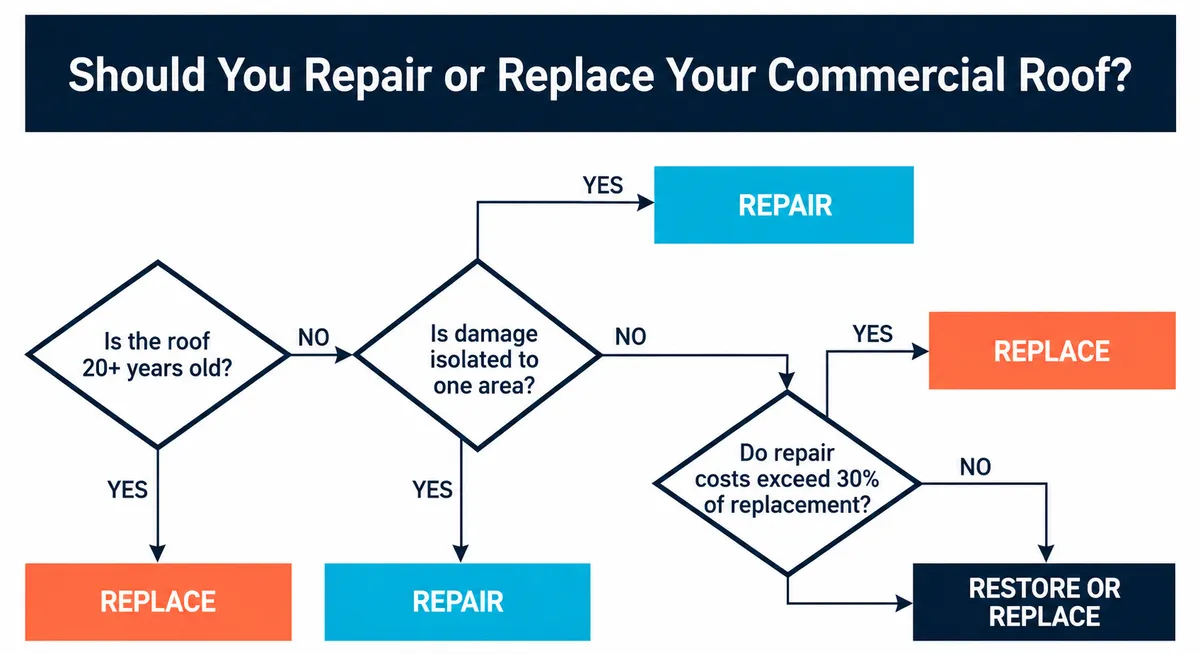
Commercial Roof Replacement vs Repair: A Decision Framework by Roof Condition
Not every commercial roofing problem calls for the same response. Use this framework to categorize your situation before speaking with a contractor.
Repair is the right call when:
- The roof is less than 15 years old and the damage is isolated to one area
- You have fewer than two documented leak events in the past 24 months
- The insulation beneath the damaged area is dry and structurally sound
- No ponding water exists outside the damaged zone
- The cost estimate for repair is less than 30% of full replacement cost
Replacement should be the primary conversation when:
- The roof system is 20 or more years old
- You are managing recurring leaks in multiple locations
- An infrared scan or moisture survey shows wet insulation in more than 25% of the roof area
- Energy bills have increased without a clear operational cause (often a sign of compromised insulation)
- A contractor has performed the same repair more than twice in the same location
Restoration may be appropriate when:
- The roof is structurally sound but the membrane is showing surface-level wear
- You need to extend service life by 5 to 10 years while planning a capital budget for full replacement
- A current roof coating or modified bitumen membrane is still adhered but weathered
For Bay Area commercial properties, permitting requirements add time and cost to both repair and replacement projects. Marin County and San Francisco both require permits for work that alters the waterproofing layer — a factor that narrows the cost gap between repair and replacement on mid-size projects.
Restoration and Roof Coatings: A Middle Ground?
In certain cases, restoration may offer a compromise between repair and replacement.
Applying roof coatings can extend service life when the underlying roof system is still structurally sound. Restoration improves waterproofing and energy efficiency without a full tear-off.
However, restoration isn’t suitable for every commercial roof, especially when structural damage exists.
Is Roof Replacement a Repair or an Improvement?
This is a common question for commercial property owners. Generally, repair restores existing performance, while replacement is considered an improvement that extends lifespan and value.
Understanding this distinction helps with budgeting, planning, and long-term asset management for your building.
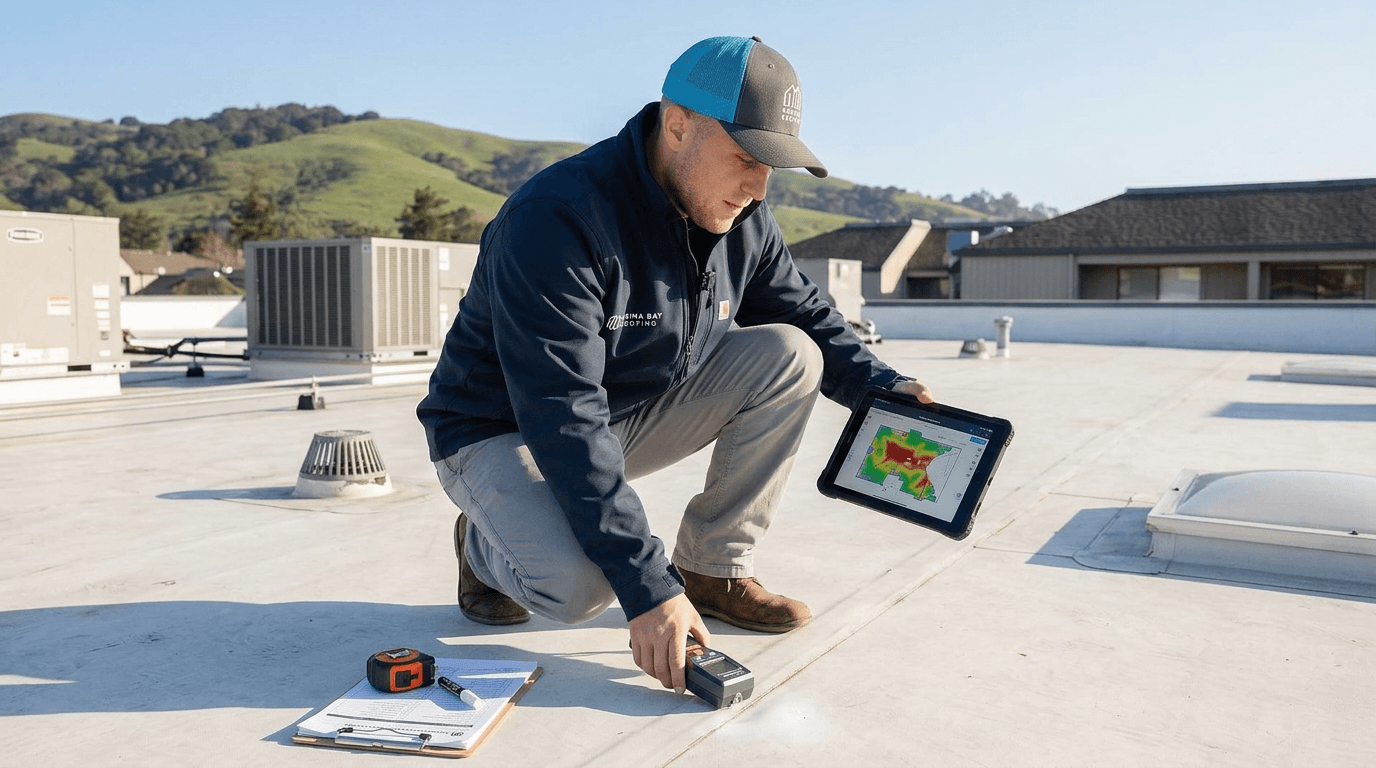
The Importance of Professional Roof Inspection
A professional roof inspection removes guesswork from the process. An experienced roofing contractor evaluates:
- Structural integrity
- Moisture intrusion
- Insulation condition
- Existing commercial roofing systems
This assessment ensures your decision is based on facts—not assumptions.
Pros and Cons of Repair vs Replacement
Every option has pros and cons:
Repair
- Lower upfront cost
- Faster completion
- Short-term solution
Replacement
- Higher initial investment
- Long-term savings
- Improved energy efficiency
- Reduced maintenance
The right choice depends on your commercial property, your budget, and the condition of your roof.
What to Look for in a Commercial Roofing Contractor Before Making This Decision
The contractor performing your inspection has a direct influence on the recommendation you receive. An experienced, licensed commercial roofing contractor will assess the full system — not just the visible damage — and provide a written evaluation that supports either a repair or replacement recommendation with documented evidence.
Before accepting a repair or replacement quote, confirm the following:
Licensing and insurance: In California, commercial roofing contractors must hold an active CSLB license. Verify the license number at CSLB.ca.gov before proceeding. Confirm the contractor carries general liability and workers’ compensation insurance for the project scope.
System-specific experience: Ask whether the contractor regularly works with the specific roofing system on your building — TPO, modified bitumen, EPDM, or built-up roofing. System experience matters. A contractor primarily trained on residential asphalt shingles is not the right choice for a commercial flat roof.
Written scope of work: Any reputable commercial roofing contractor will provide a written scope of work that specifies the repair area, materials, method, and warranty terms. A verbal estimate alone is not sufficient for a decision of this scale.
Warranty coverage: Commercial roofing repairs should carry a workmanship warranty. Replacement projects should include both a manufacturer’s material warranty and a contractor workmanship warranty. Confirm both before signing.
Marina Bay Roofing holds CSLB License #1133789 and is fully bonded and insured. We serve commercial property owners throughout Marin County and the San Francisco Bay Area, including San Rafael, Novato, Mill Valley, and surrounding cities.
Making the Right Decision for Your Bay Area Building
For businesses in Marin County and the San Francisco Bay Area, climate and property value make commercial roof replacement vs repair a strategic decision—not just a maintenance task.
Whether you choose repair, restoration, or full replacement, the goal is the same: protect your building, control cost, and avoid unnecessary damage.
A clear evaluation today prevents expensive surprises tomorrow.
If you manage or own a commercial property in Marin County or the San Francisco Bay Area and are weighing repair against replacement, the right starting point is a professional inspection — not a contractor recommendation made from the parking lot.
Marina Bay Roofing provides commercial roof inspections and written assessments for property owners who need a clear, unbiased picture of their roof’s condition before committing to a project scope. Call (628) 233-8140 or schedule a commercial consultation.